Client overview
Jennaye.com is a lifestyle blog covering interiors, product reviews, and recipes. With hundreds of evergreen posts and strong historical organic performance, the blog drove a high volume of organic traffic and revenue.
When Jen approached us, her blog was hit hard by the August 2024 Google core update.
Jen needed an SEO expert to help diagnose the impact of the algorithm update and rebuild content quality signals to restore lost traffic. Through 1:1 coaching, we worked on comprehensive content audits, keyword and competitor analysis, and a content strategy for refreshing existing posts and publishing new content.
The challenge
The August 2024 Google core update caused huge disruptions across the blogging and content publishing world. On Reddit, many blogs reported huge drops in impressions and clicks, with 30-90% traffic drops.
Eddie Mercado (Raptive) noted that sites that seemed to do everything ‘right’ were still impacted.
Following the update, Jen’s website experienced:
- A 50% decrease in organic traffic
- Ranking drops for previously high-performing posts
- Loss of blog revenue
We needed to figure out why Google devalued certain pages, rebuild content quality signals, and restore traffic to the site. Beyond recovery, Jen also wanted to future-proof her site. We worked on technical SEO improvements and explored Google’s AI Overviews.
The results
Through in-depth content audits, keyword analysis, and 1:1 SEO coaching sessions, Jen’s blog started to recover its traffic.
- Blog traffic grew from ~6,000 to over 30,000 monthly visits
- Multiple refreshed posts regained first-page rankings
- New content began ranking quickly, driving incremental growth
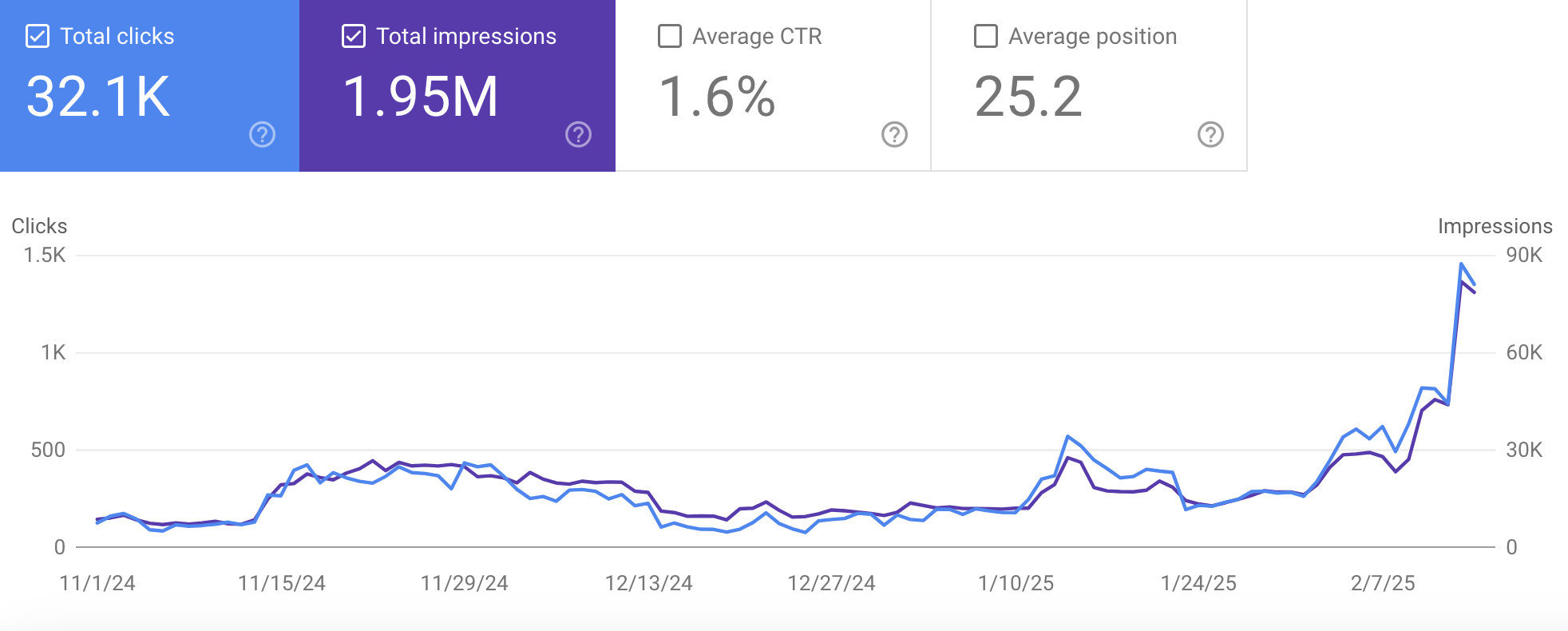

Leanne has been so helpful over the last 4 months. I have learned how to really analyze my stats and keep digging to get to the best results. My traffic is growing again – I went from 6K to over 30K in my time with her!
Jen Hermann, Marketing Consultant and Content Creator
- The site later appeared in Google AI Overviews, ChatGPT, and other AI-powered engines
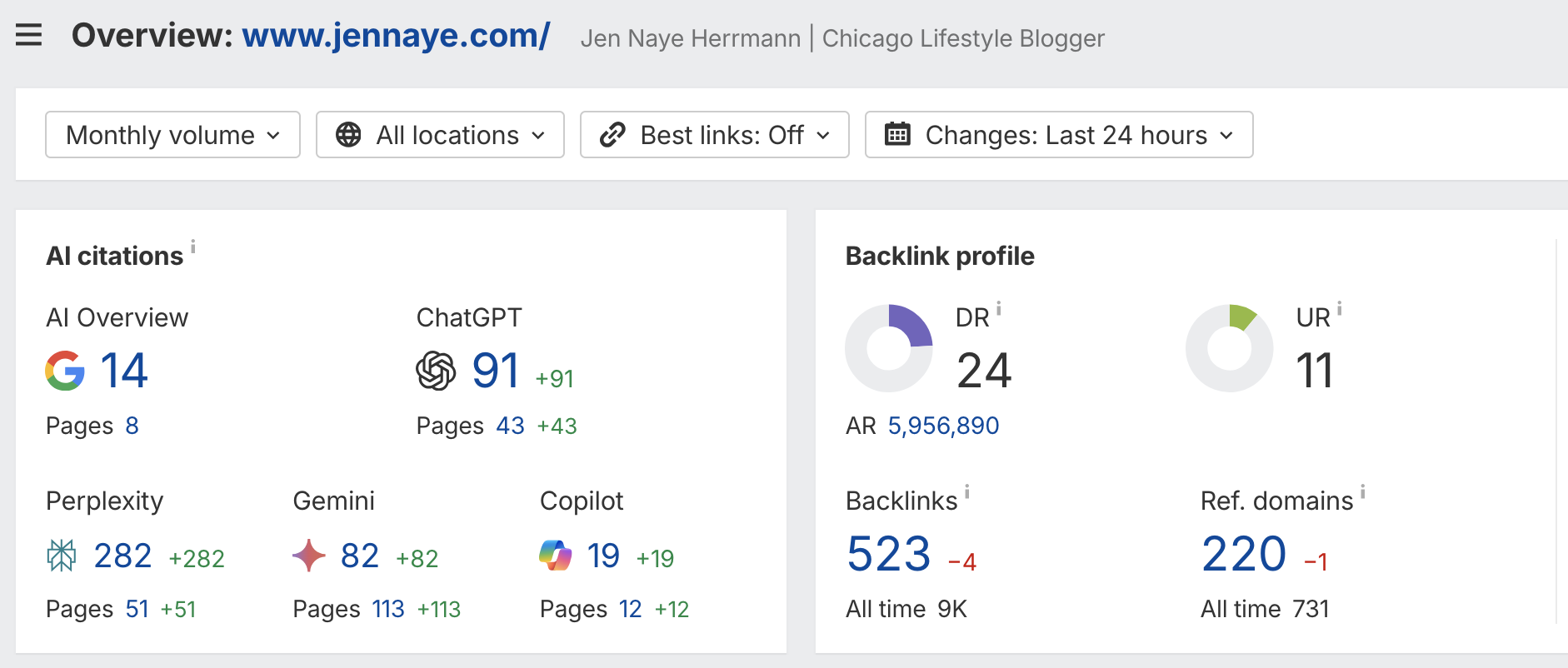 Ahrefs, brand radar AI citations
SEO project summary
Over four months, I worked with Jen to rebuild her SEO from the ground up. We started by auditing her content post-Google update using Ahrefs, Semrush, Google Search Console, and Google AI Studio to figure out which pages and keywords were most affected.
We put together a content plan for creating new blog posts and updating existing ones. A combination of publishing fresh content while improving the current articles played a big part in helping traffic bounce back.
New posts started ranking on Google and bringing in fresh traffic, while the older ones were getting a refresh to help them bounce back in search results.
After that, we turned our attention to technical SEO. Things like errors, indexing, and site hygiene factors — to make sure the website was in the best shape possible.
Here’s a breakdown of what we worked on:
1. Content and keyword analyses
We analyzed pre- and post-update SEO data to identify the pages and keywords with the highest recovery potential.
Prioritizing historically high-performing, seasonal, and revenue-driving content. This surfaced the keyword targets most likely to return to top 3 rankings and reclaim lost traffic.
2. AI-assisted content audits
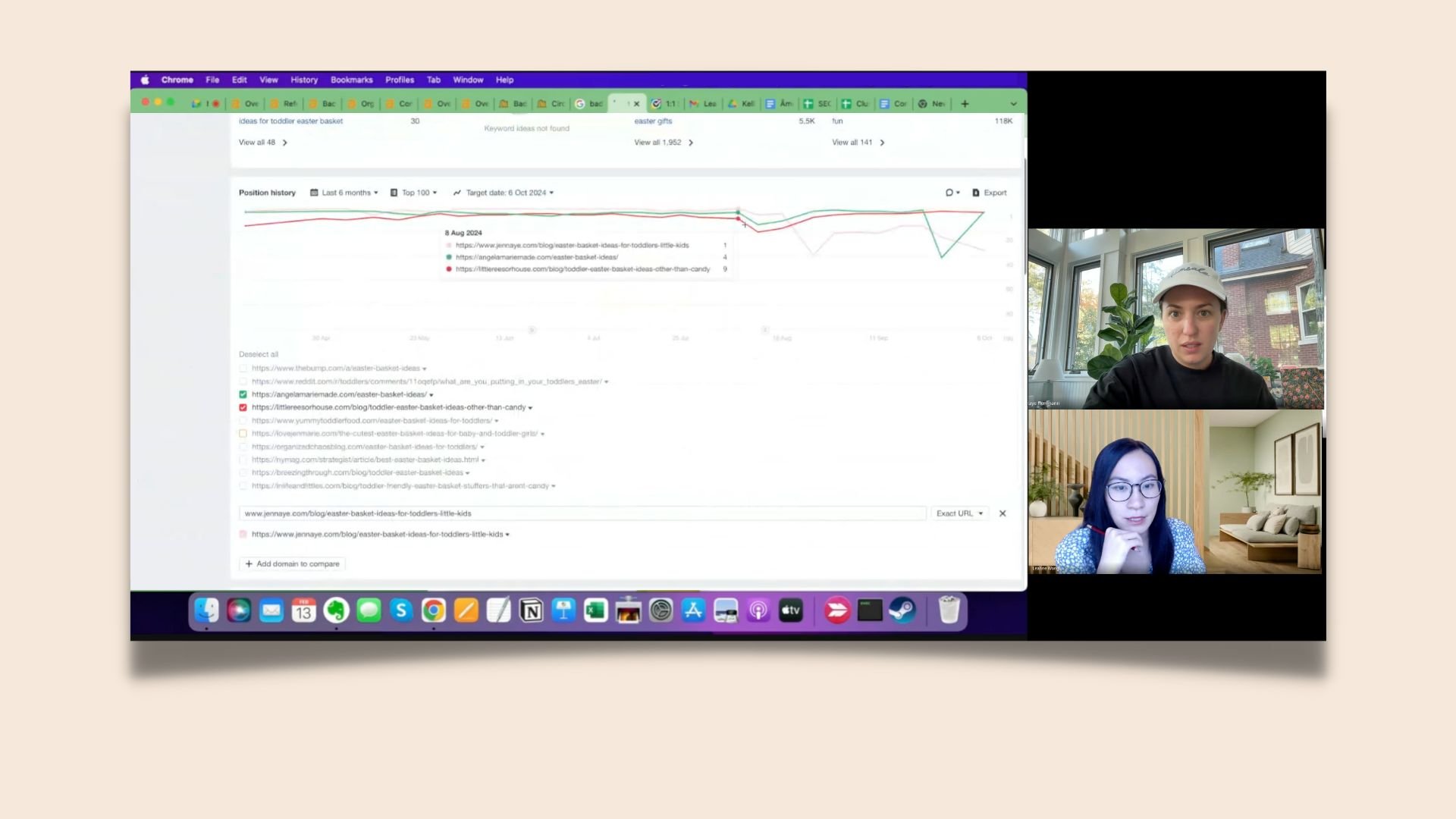
Using Ahrefs, we analyzed each blog post’s keyword ranking position change.
This helped us visualize exactly when rankings began to drop, and more importantly, which sites replaced Jen’s in the search results after the Google update.
Some competitor pages dipped right after the update but rebounded later, which suggested they had stronger overall content quality or there was something in their content that Google’s algorithm rewarded.
Here’s the step-by-step workflow:
(i) Pick a blog post to analyze.

(ii) Organic keywords report
The organic keywords report shows us the keywords that the article ranked for. We then set the date filter to compare the current date to the last 6 months (pre- core update)

Sort the keywords list by highest traffic difference
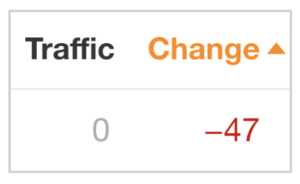
Picked the main keyword that historically drove the most traffic or revenue to the article. This made it easier to isolate what changed and why.
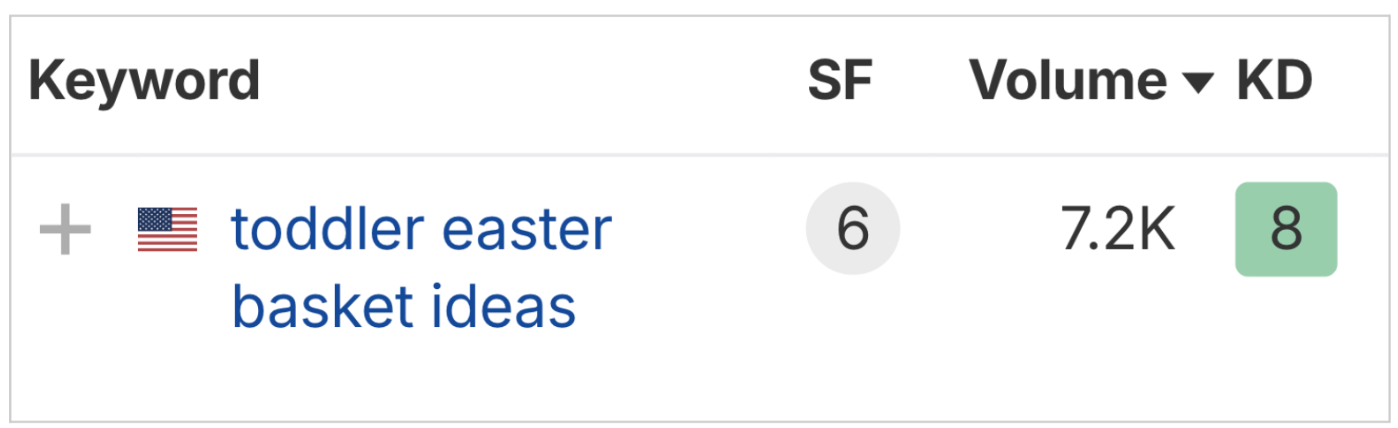
(iii) Analyze ranking change using the Position History chart in Keyword Explorer
Open the Position History chart to see how rankings moved over time. This was how we analyzed each blog post’s keyword ranking position change.
We compared Jen’s blog post URL against the top-ranking competitor pages for that same keyword. The Position History chart is super useful to see how the SERPs changed before and after the core update.
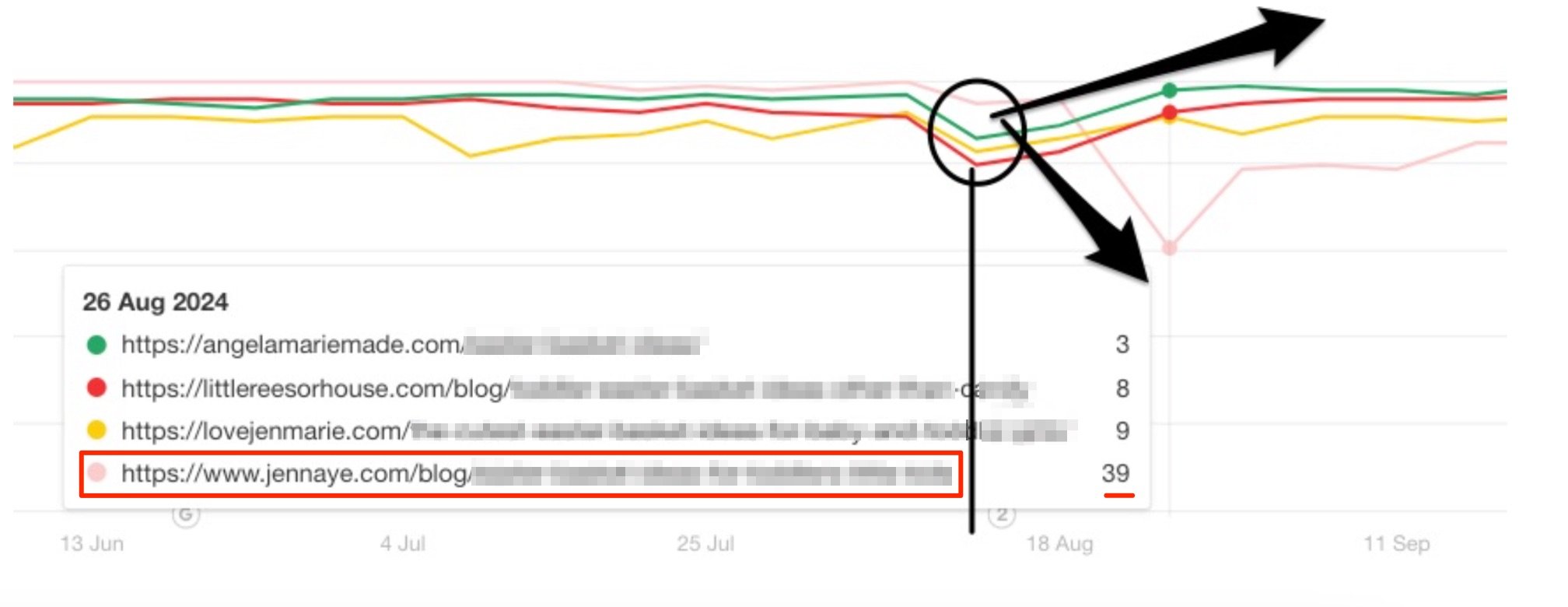
While our article dropped from the top 10 positions to position 39, some competitor pages had actually performed better after the Google update.
The next step was to do a content audit to figure out:
- What helped these articles survive (or even benefit from) the algorithm update
- Why did Google promote these competitor articles post- update
- And how we could improve Jen’s content quality signals and refresh her blog post to regain lost ranking positions and traffic
We used Google AI Studio for content auditing and analysis.
3. Content refresh and new content strategy
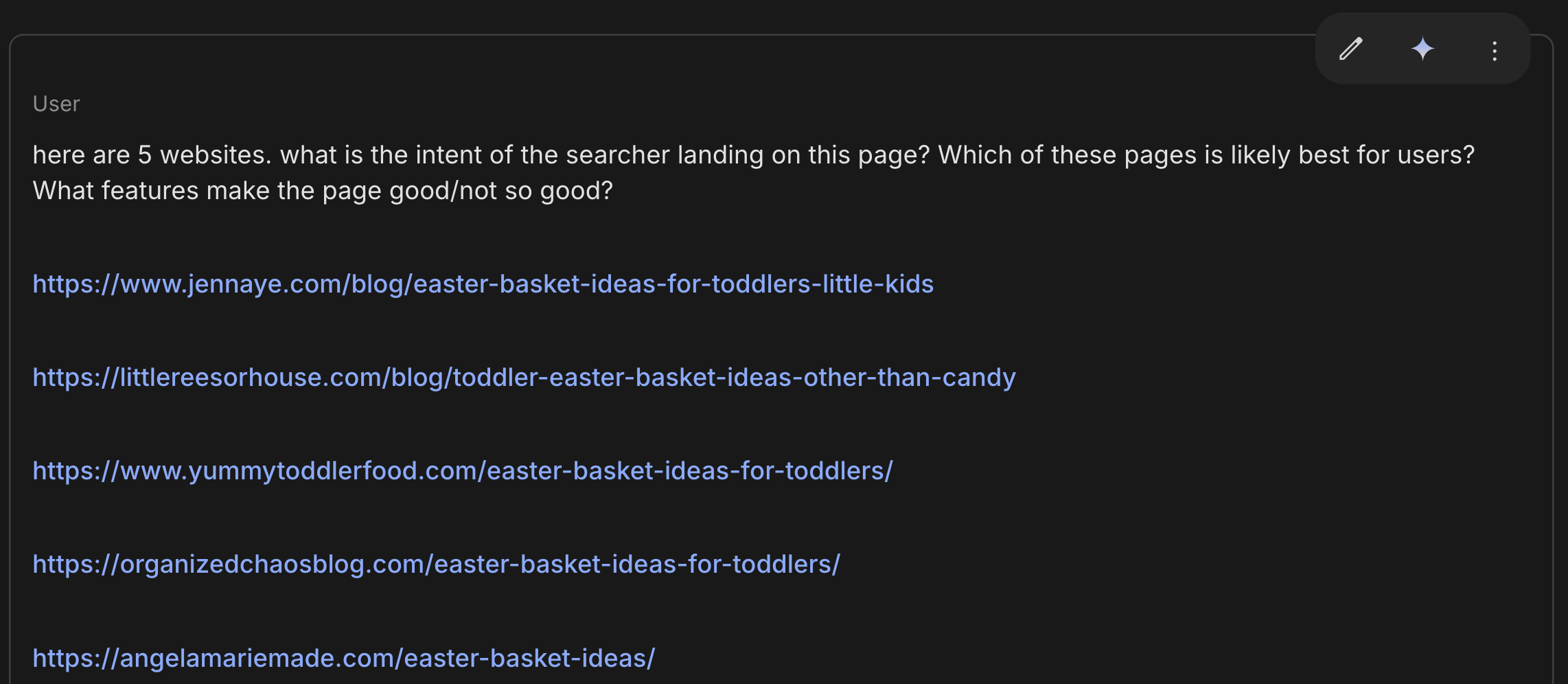
We used the Gemini 1.5 Pro model in Google’s AI Studio to study competitors’ pages that improved after the update. It was super helpful to have Gemini quickly audit the content by feeding it the blog post URLs.
We asked Gemini questions like:
- What is the searcher’s intent for this keyword?
- Which pages best meet that intent?
- What makes these pages strong (or weak)?
- How could Jen’s blog post content be improved?
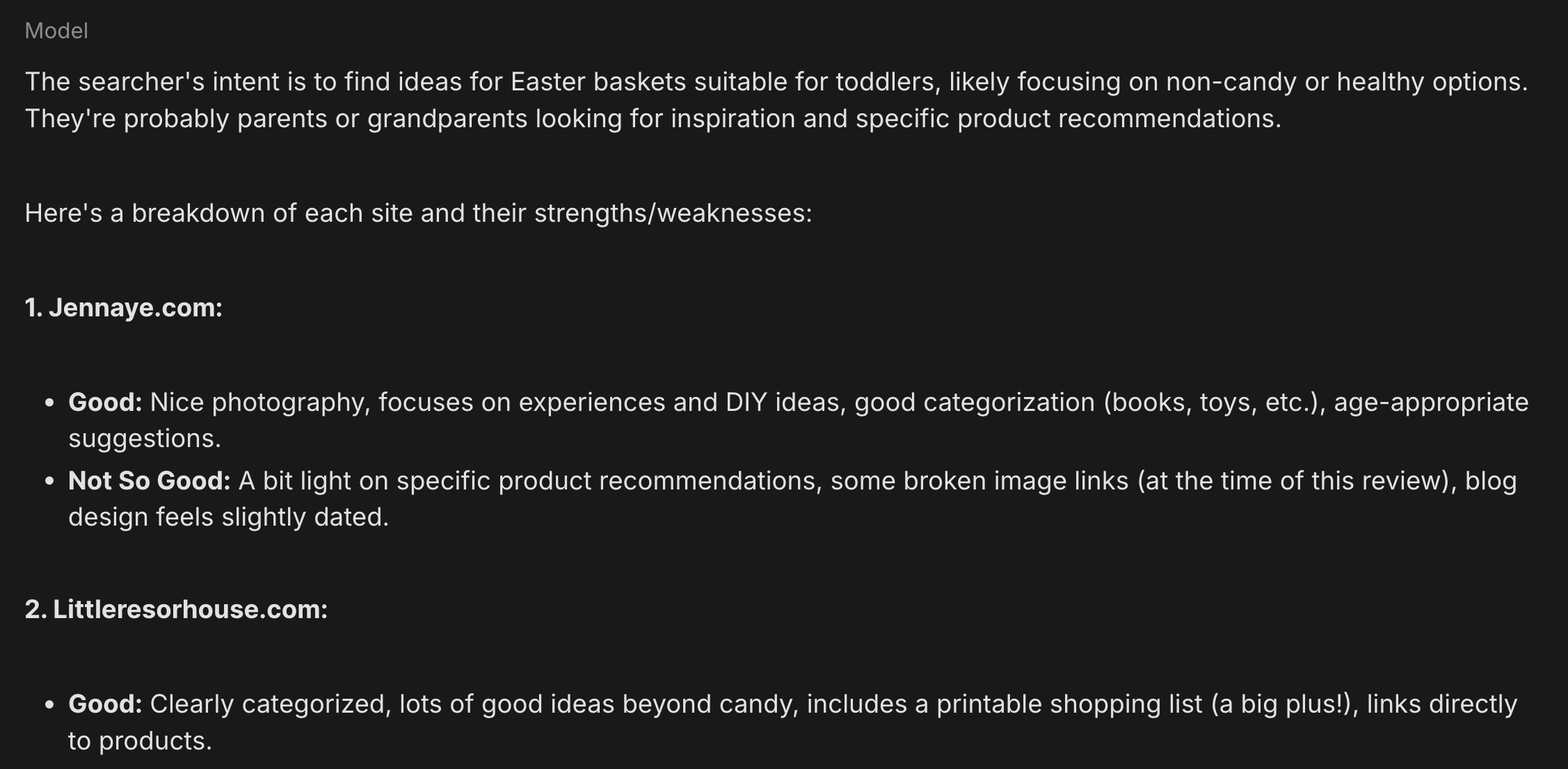
Gemini responded with suggestions on the possible search intent and compared each of the blog posts, with a breakdown of each site’s strengths/weaknesses.
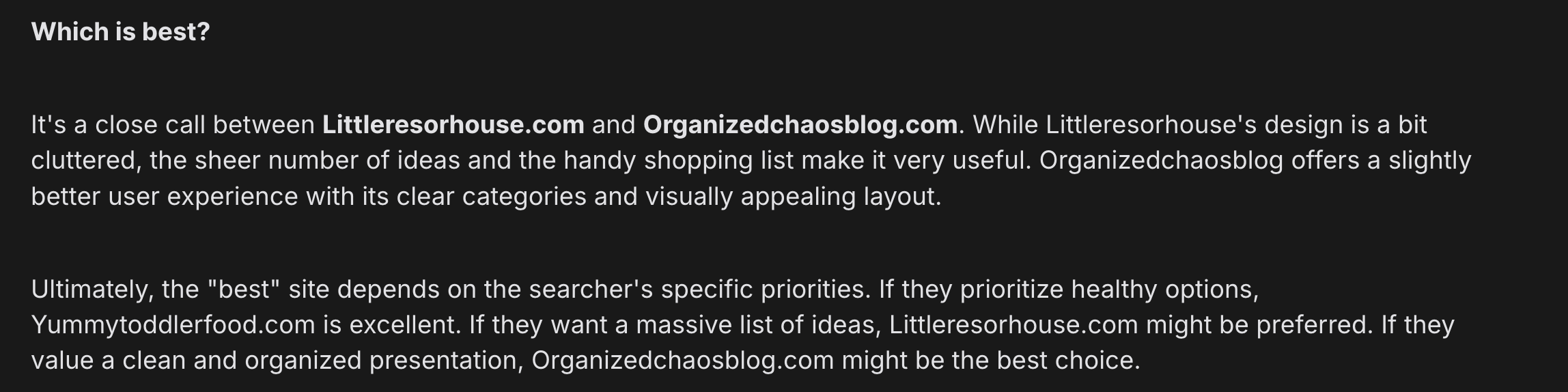
Gemini picked these competitor sites as the best pages for the user. Voila, this information could be used to improve our content!
Lastly, I asked Gemini how the first site (Jen’s blog post) could be improved.
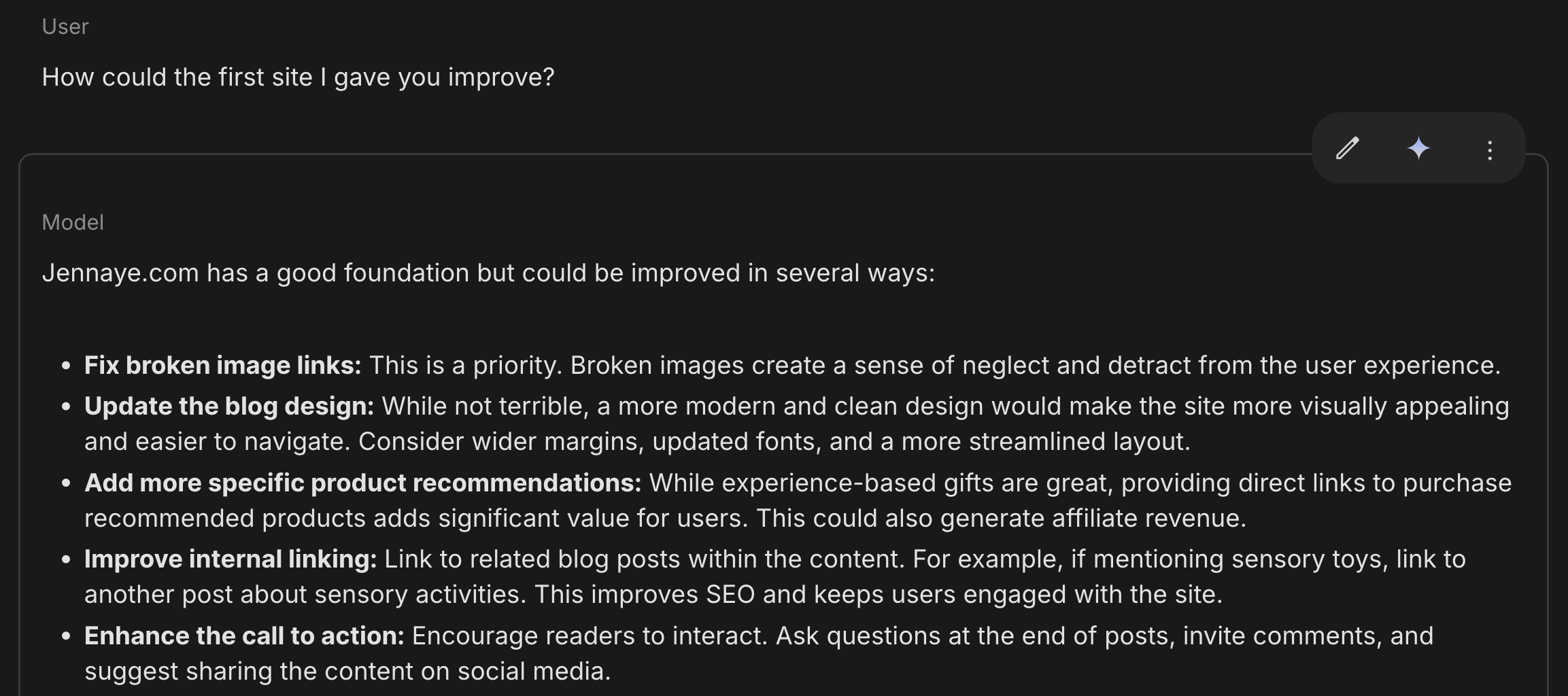
And this was how we used Ahrefs + Google AI Studio to assess content gaps after an algorithm update. By selecting articles that were rewarded post-update, and asking Gemini to identify the search intent, strengths/weaknesses and areas for improvement!
During one of our coaching sessions, we brainstormed a content plan focused on creating new blog posts that could bring in fresh traffic. We looked for topics that made sense for her readers that also had good search demand with low competition.
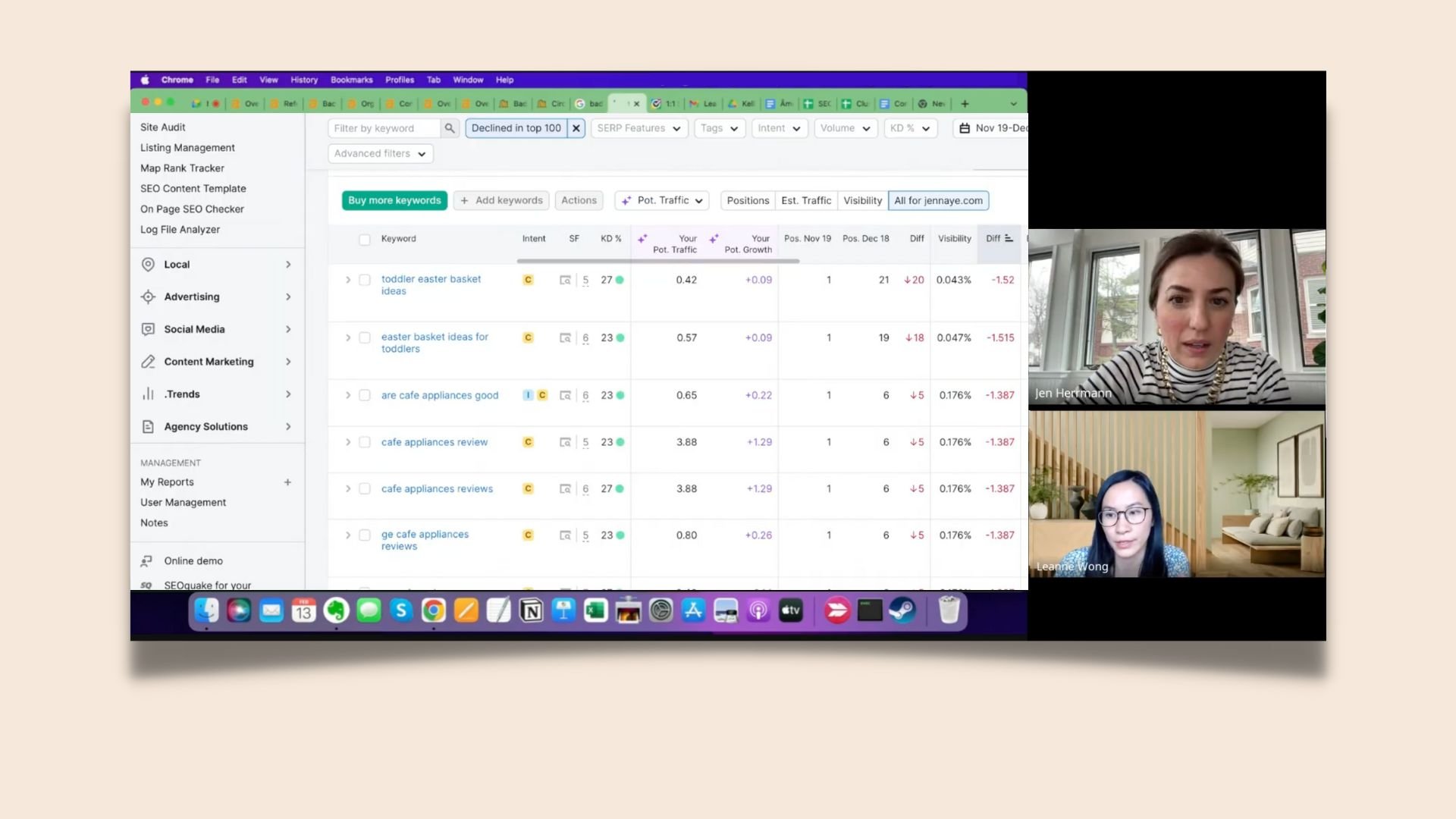
New articles started ranking quickly on Google, bringing in a new stream of fresh traffic.
Meanwhile, Jen continued to update her older blog posts — the ones that had taken a hit in rankings after the update. She refreshed the content, improved on-page SEO, and content quality.
Over time, those posts began to climb back up. This combo of publishing new content and improving what was already there eventually helped with regaining site traffic.
4. Technical SEO
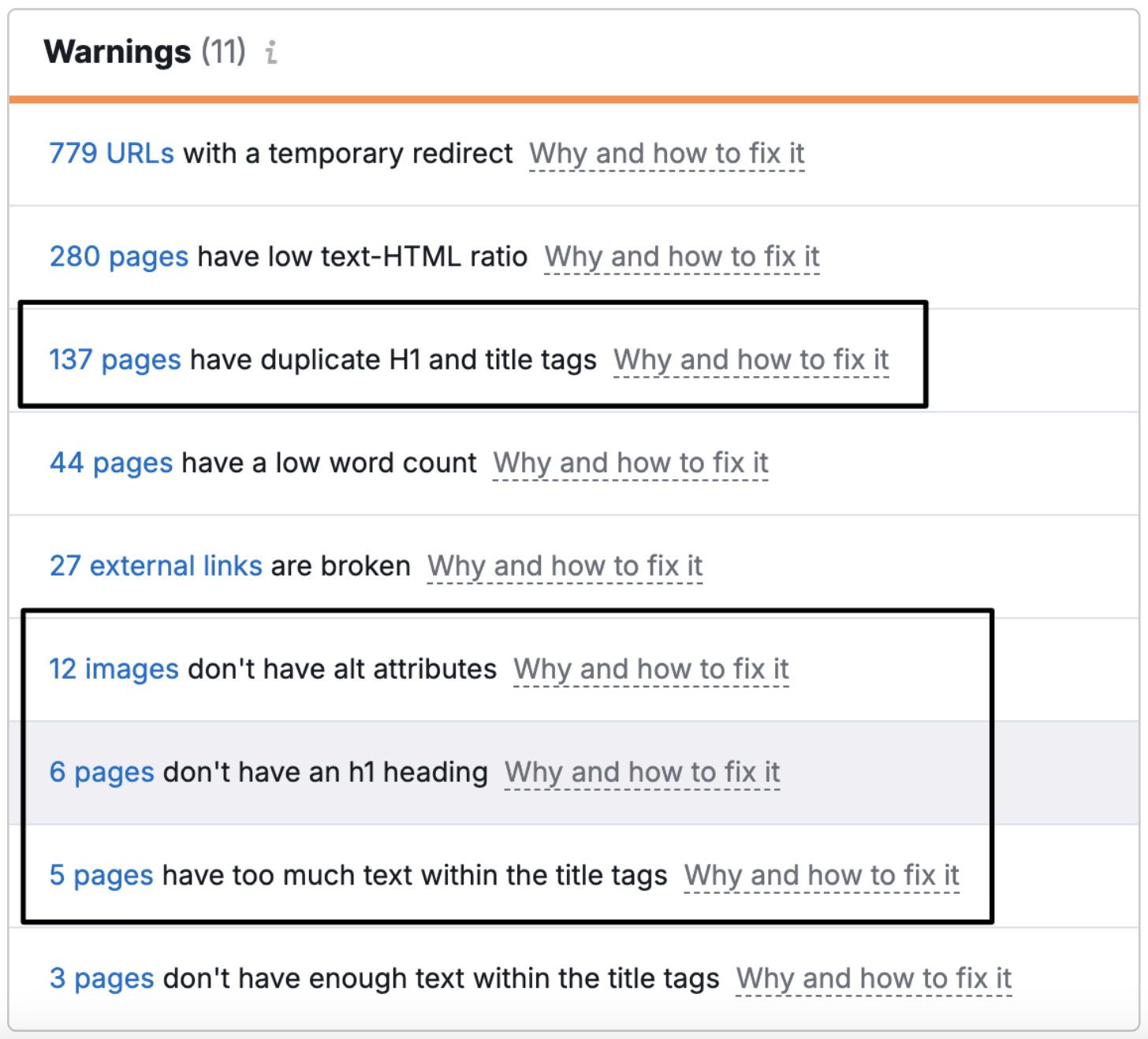
Site hygiene was a priority. We had hundreds of articles and had scheduled site audit crawls in Semrush. A lot of URLs were showing up under “Warnings”, and we filtered through them to address the critical issues from the less urgent ones.
Pages not indexed
We encountered a tricky situation with pages not indexed in Google search console.
Like Broken pages (404) or Alternate page with proper canonical tag.
This meant Google wasn’t indexing those pages—either because they were broken or because the canonical tag pointed to a different URL.
Our fix? We made sure none of those were high-value pages we actually wanted to rank. Then we worked on reducing the number of flagged pages overall to clean things up.
Conclusion
As Eddie Mercado (Raptive) said, “The era of easy traffic is over. Authentic, quality traffic wins.”
The big question is, can sites that were impacted by Google’s algorithm update recover? I think the answer is, YES. We started to see traffic recovery with Jen’s blog as we optimized and improved content.
Google also said that it could take several months or wait until the next core update to see the effect of your improvements.
Services engaged
For websites that already have the basics in place and are ready to grow – increase traffic, rankings, and conversions from Google and AI engines. Topics covered: SEO strategy, keyword refresh, content audits, blogging strategy, technical site hygiene, and AI search.