The biggest SEO mistake for business owners rarely comes from dramatic algorithm penalties or broken links on your site. The biggest issue is when your rankings have slipped, and organic leads aren’t coming in as much as they used to.
So you open up Ubersuggest, Ahrefs, Semrush, maybe peek into Google Search Console—and sure enough, your site isn’t showing up where it used to.
It’s a slow decline. The kind that can silently degrade your organic performance over time.
The good news? It’s fixable.
Below, I’m sharing seven sneaky issues that can quietly chip away at your rankings, plus how to catch them early and course-correct with a bit of SEO housekeeping.
1. Content decay
Content decay happens when your once-valuable article is no longer the best answer to the user’s search query. This can happen as search intent evolves, new competitors enter the fold, and new SERP features are introduced.
When your old content becomes outdated and is no longer the best answer to the keyword, it can gradually lose its ranking position in search results.
Example
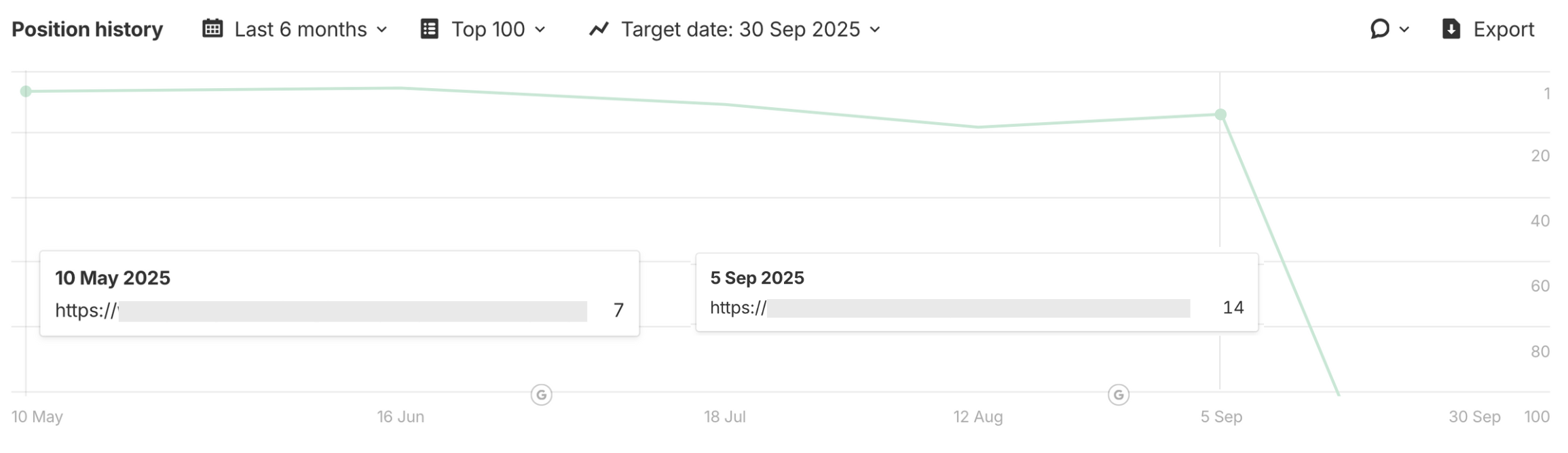
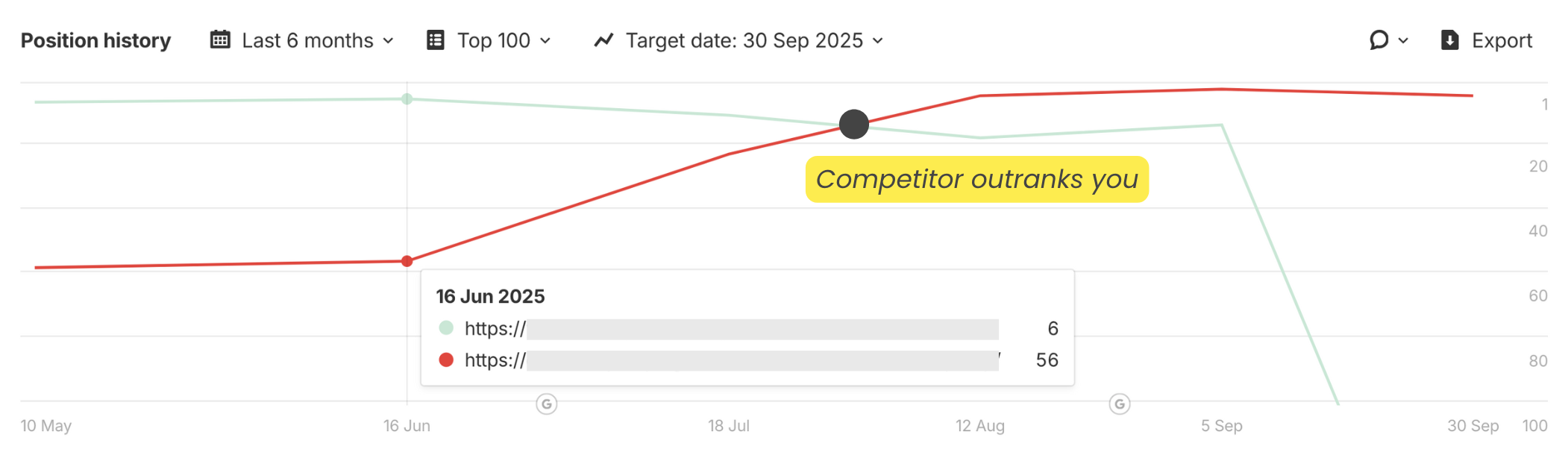
This blog post once ranked in position 7 on Google, and stayed within the top 10 positions for the last 2 years. Then, sometime in July, it slowly started to slip out of the top 10 positions.
As new competitors entered the fold, they stood to potentially outrank it.
It won’t be instant. Organic rankings will take time to move around the search results (moving up or down).
How to fix it:
Track your main keyword ranking positions in tools like Ubersuggest, Ahrefs, Semrush or Google Search Console.
When you see signs of rankings starting to slip, refresh your content. Update it with more recent information, improve keyword targeting, and on-page SEO.
Identify who is moving up the search engine results pages (SERPs) and potential gaps in your content.
2. Ignoring new competitors
One of the most common ways your SEO performance can quietly take a hit? Letting new competitors quietly edge you out without even realizing it.
You might assume your current ranking will hold steady if you’re ranking on Page 1, so it’s better not to change anything.
But that’s exactly the problem: others have.
And if you’re not actively monitoring the search results for your key pages and keywords, new players can slowly climb the ranks and push your website further down the page.
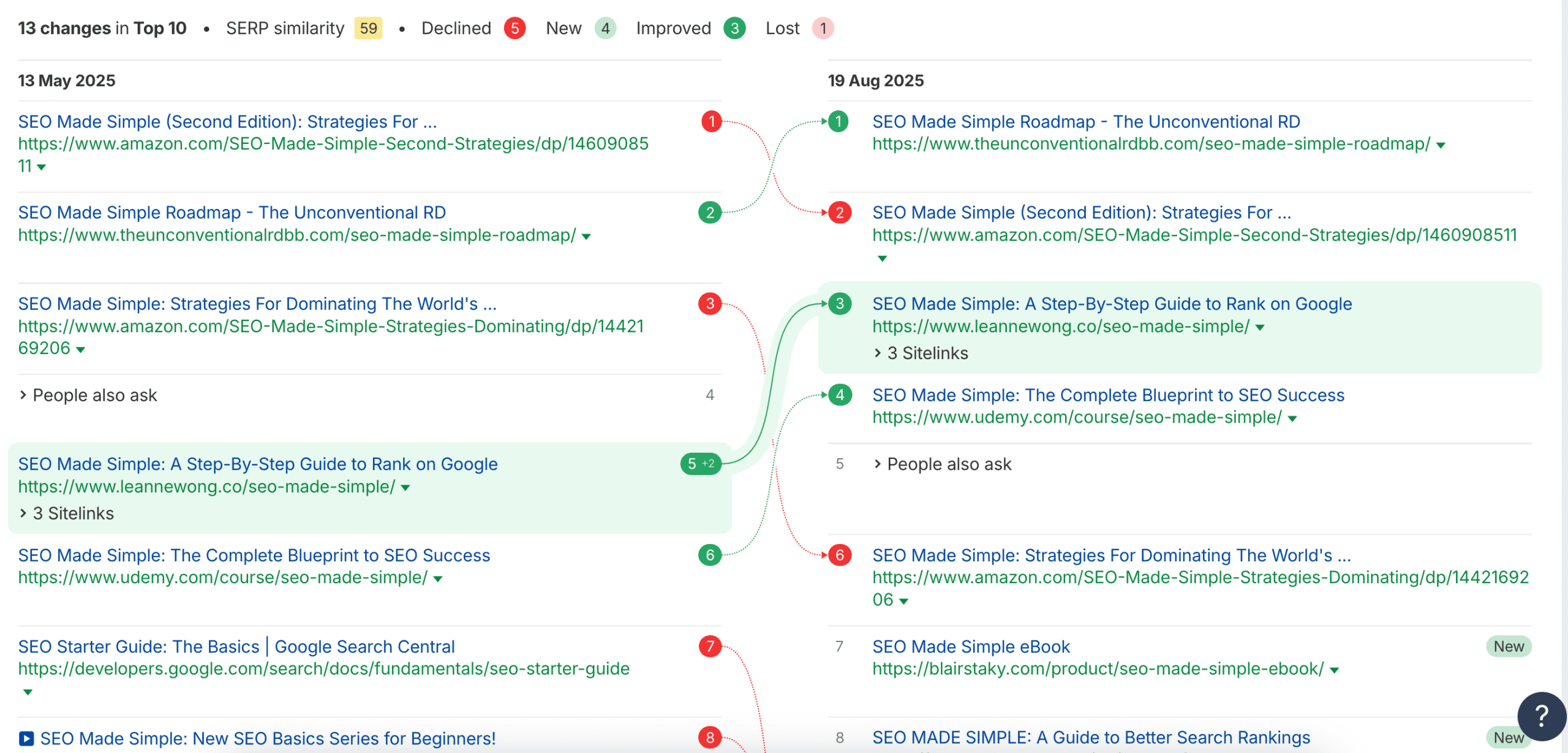
Take a look at the SERP image above.
Between May and August, there were 13 changes in the top 10 results for the keyword “SEO made simple.”
Several brand new competitors appeared like an SEO ebook from Blair Staky and a fresh Udemy course, while other websites improved or lost their positions.
If you’re not watching the SERP regularly, these shifts can happen under the radar. And by the time you notice a drop in traffic, it’s already costing you traffic and potential leads.
SEO isn’t just about what you’re doing. It’s also about staying aware of what others are doing, too.
How to fix
A monthly check-in on your top keywords can go a long way in helping you stay competitive. Regularly check up on your main keyword rankings. Here are 5 ways to check your keyword rankings on Google.
3. Lack of keyword research and optimization
You can write the most helpful, well-crafted blog post in the world. But if Google doesn’t understand what it’s about to match it to the right user search queries, it will hold your content back from ranking high up on SERPs.
This happens when content is created without proper keyword research, or if you don’t intentionally optimize your content for specific search terms.
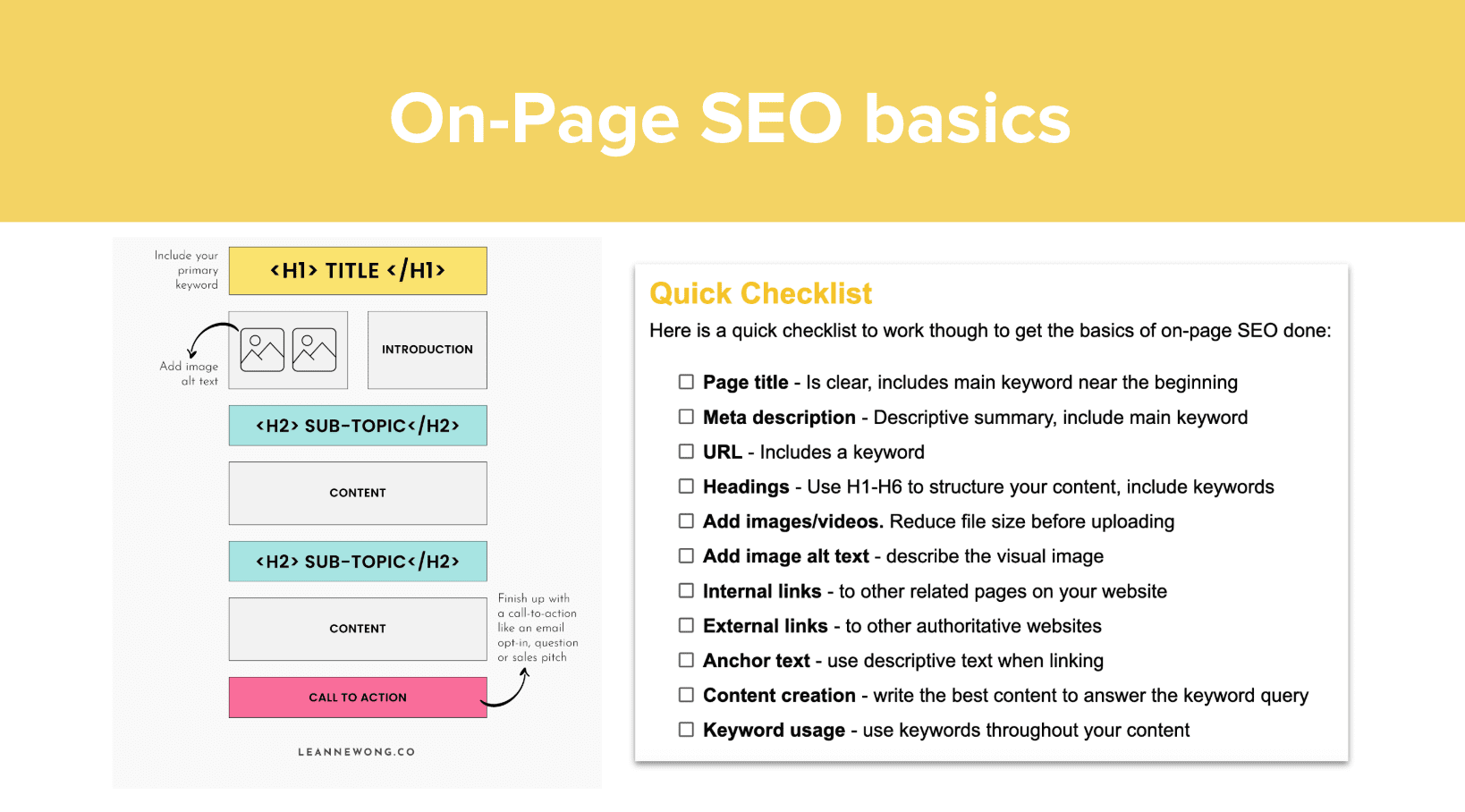
Without clear keywords in your title, headings, meta descriptions, and body copy, your page might have a tought time to get surfaced for the very queries it’s meant to answer.
You’re essentially hoping Google will read between the lines.
This is one of the most common reasons good content underperforms.
How to fix it:
Start by identifying one primary keyword for your page, along with a few semantic variations (related terms and phrases people might also search for). Tools like Ubersuggest, Ahrefs, or even Google’s “People Also Ask” box can help here.
Once you’ve got your keywords:
- Use the primary keyword in your page title and URL
- Naturally work it into your H1 and at least one subheading
- Sprinkle it (and related phrases) throughout the body text
- Update your meta title and description to reflect the keyword clearly
4. Keyword and content mismatch
Keyword and content mismatch happens when your page or blog post is not a good match for the keyword you want to rank for.
Sometimes, the issue isn’t your content quality or authority. It’s that the content doesn’t line up with what people actually want when they search your chosen keyword.
This came up during one of my group coaching calls in the SEO Demystified course program. One student was frustrated that her service page for website design for artists wasn’t ranking for the phrase “website for artists.”
That was the service she offers—so why wasn’t Google showing her page?
We did a quick search for the keyword live on the call. And sure enough, the results were packed with professional website builders like Wix, Squarespace, and Webflow—not website design service providers.
The AI Overview showed blog posts and content about how to build your own website.
The search intent was clear: users weren’t looking to hire someone, they were looking to build a website themselves.
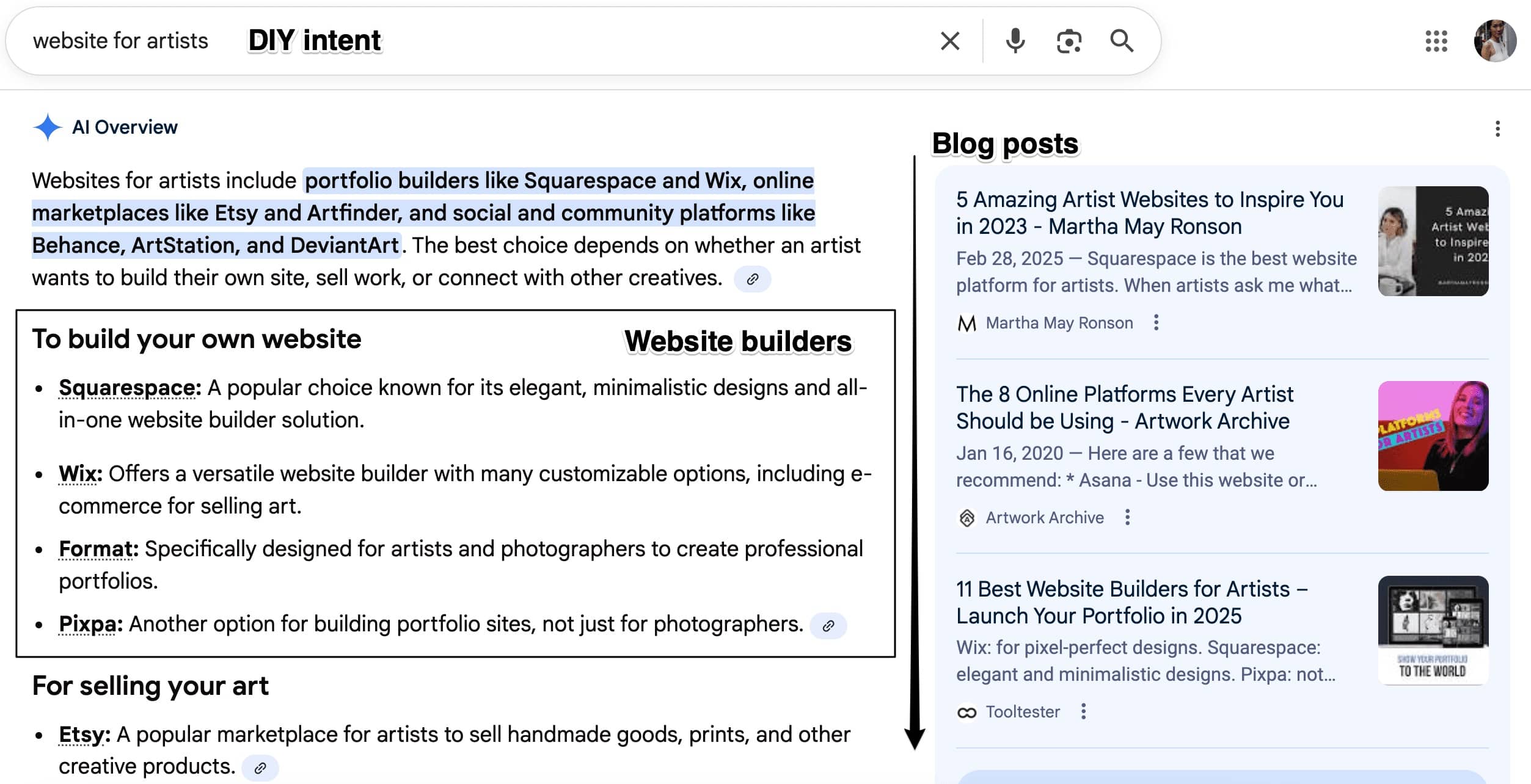
That’s a textbook case of keyword and content mismatch. Her service page wasn’t the best choice to rank because it didn’t align with what Google had determined the searcher actually wanted.
How to fix
Here’s what I told her—and what you can do too:
If you’re targeting a keyword with DIY intent, like “website for artists,” try creating a helpful blog post or resource around it—something like “Top 5 Website Builders for Artists (and When to Hire a Designer Instead).”
Keep your service pages optimized for bottom-of-funnel keywords, like “custom website design for artists” or “web designer for artists.”
Always do a quick Google search for your target keyword before creating content.
Let the SERP (search engine results page) guide you. If the top 10 are all listicles, don’t try to rank with a service page. If they’re all product pages, a blog post probably won’t cut it.
Matching the type of content and its intent to the keyword is a big part of being successul on search.
5. Not keeping up with SERPs
Like it or not, the search landscape has changed.
We’ve got AI Overviews. People Also Ask. Local pack. Featured snippets. Google’s AI Mode.
If your strategy still revolves around 2019-style blog optimization, you’re optimizing for a version of Google that no longer exists.
Here are 3 ways optimizing for traditional SEO is different from AI Overviews.
| Area | Optimizing for Organic Blue Links (Traditional SEO) | Optimizing for AI Overviews |
|---|---|---|
| Content structure | Hierarchical structure (H1, H2, H3), internal links, keyword density, and meta descriptions are crucial for search engines to understand and rank a page. | Everything in traditional SEO. But in addition, content should be structured to easily provide extractable, direct answers. Using clear headings, numbered lists, bullet points, and defined Q&A sections will be helpful. |
| Keyword strategy | Focus on optimizing for specific keywords, long-tail variations, and search volume to rank highly for a wide range of queries. | Everything in traditional SEO. In addition, focus on natural language queries, conversational questions, and providing definitive answers. The content needs to address common user questions directly and clearly. |
| Authority (Backlinks) | Domain authority and backlinks are primary ranking factors. The goal is to earn high quality backlinks to increase the website's PageRank. | Mentions from other credible sources matter. For example, mentions from reputable niche publications, Wikipedia, Reddit. |
How to fix
Stay current. Adapt your SEO strategy to include showing up in AI Overviews and AI Mode.
Use tools that can identify AI opportunities within your keyword targets.
Below, I’m using Ahrefs to uncover keywords my site already ranks for that also trigger an AI Overview in Google.
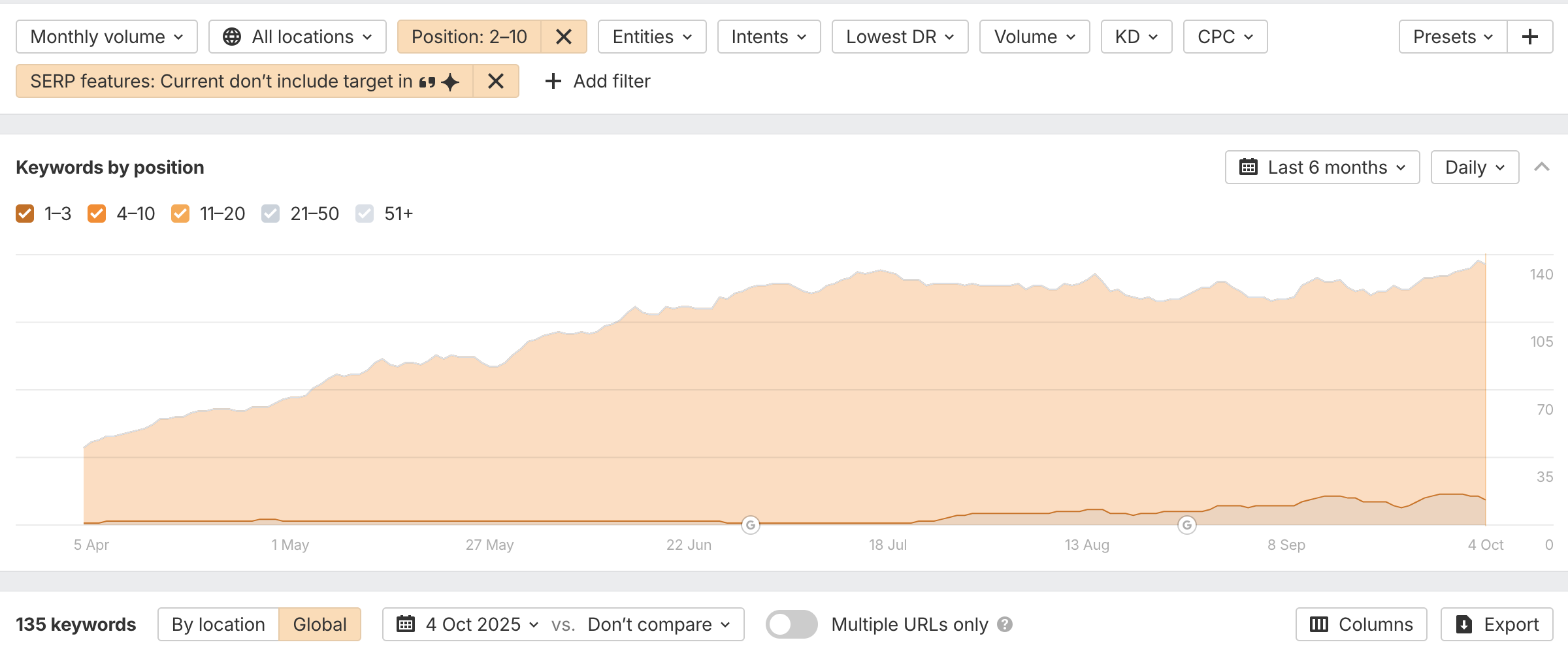
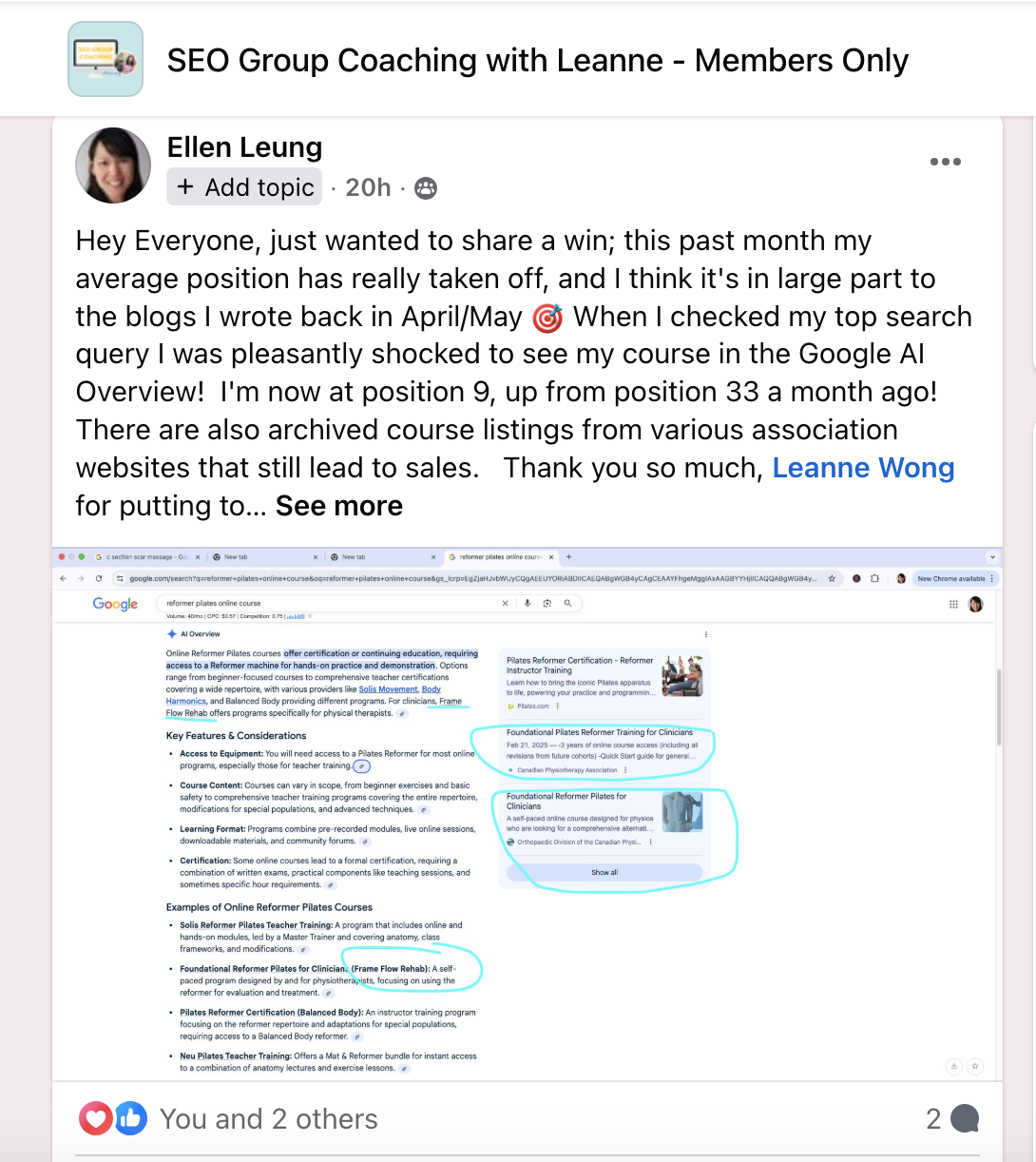
That said, a strong foundation in SEO would overflow into AI visibility as well. We’ve seen see course members showing up in AIO, and getting sales from ChatGPT by just focusing on the fundamentals.
6. Ignoring backlinks
Domain authority is still the most credible and consistent ranking factors. I mean, how else should the search algorithm choose your website over thousands of others with the same content?

High-quality backlinks are fundamental as essential trust and credibility signals for Google and other search engines too. Ignoring them is a mistake because you forgo one of the most powerful and consistent ranking factors in search algorithms.
If you’ve published hundreds of blog posts but still aren’t ranking on the first page for key search terms, or driving at least 1,000 monthly visits from Google—it’s likely not a content problem.
It’s an authority problem.
A website with few or no backlinks appears untrustworthy to Google. It’s like a business that nobody has heard of or recommended; people and algorithms are less likely to trust it.
I always recommend aiming for a DR or DA score of at least 30/100. You can check up on your website’s authority with Ahrefs’ free authority checker tool.
How to fix
Build relationships. Create data-driven or shareable resources. Collaborate with other sites, contribute guest posts, and earn digital PR mentions. Authority compounds over time.
7. Site accessibility
This is about making sure search engine crawlers and AI bots can actually reach and read your site.
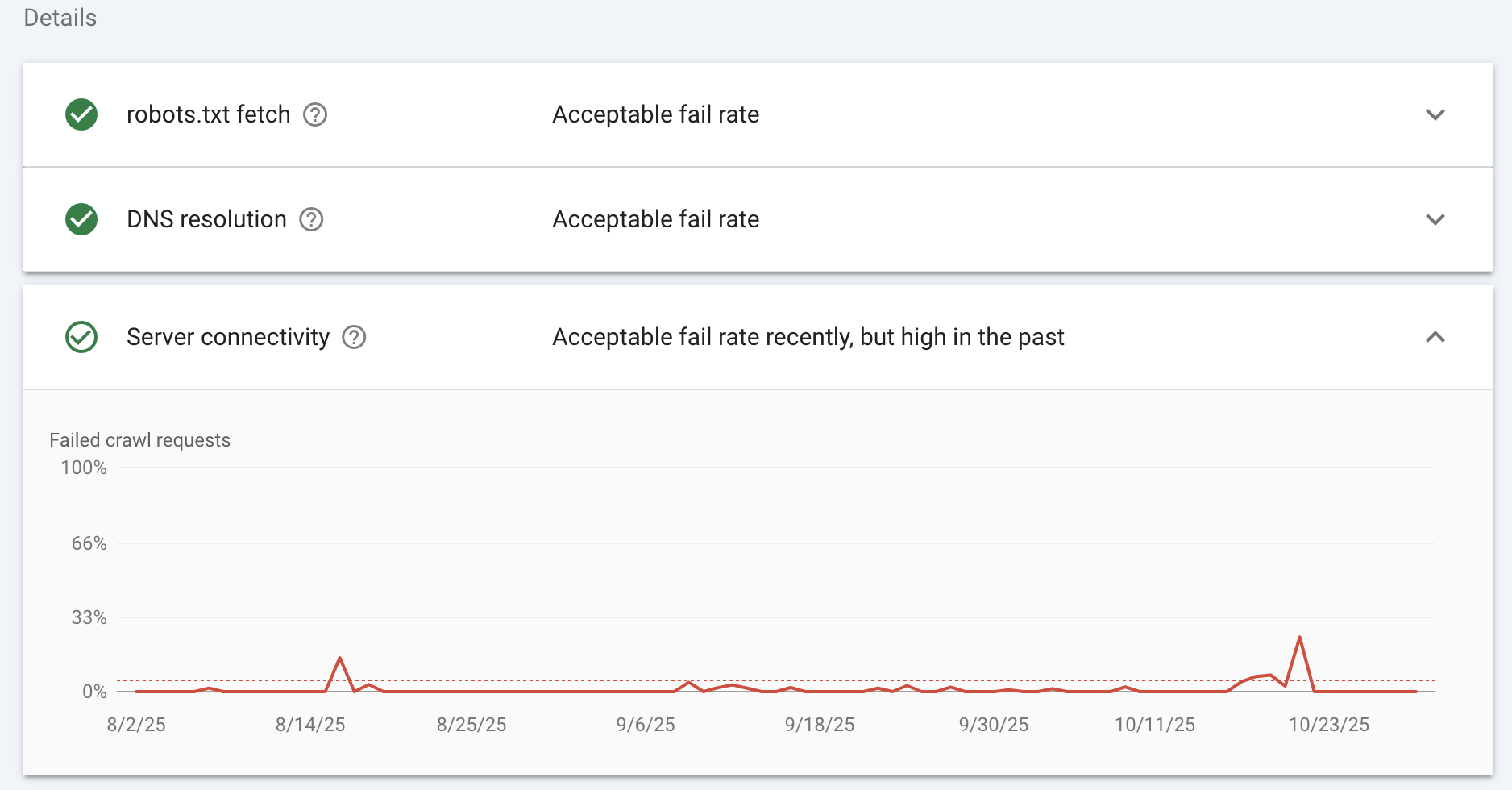
Take the example in the screenshot above. Google Search Console has flagged that it has had crawling issues with your website in the past, and for weeks, Googlebot was unable to connect to your website.
That means your site may have been invisible to Google at times, not because your content was bad, but because bots literally couldn’t access it.
Another thing to check is AI bot accessibility.
And a robots.txt file isn’t enough. Behind-the-scenes settings like your web hosting configuration, content delivery network (CDN), or firewall rules can unintentionally block bots.
Including Googlebot and newer AI crawlers from accessing your pages. If they can’t access your site, you’re basically invisible in search results and AI-generated answers.
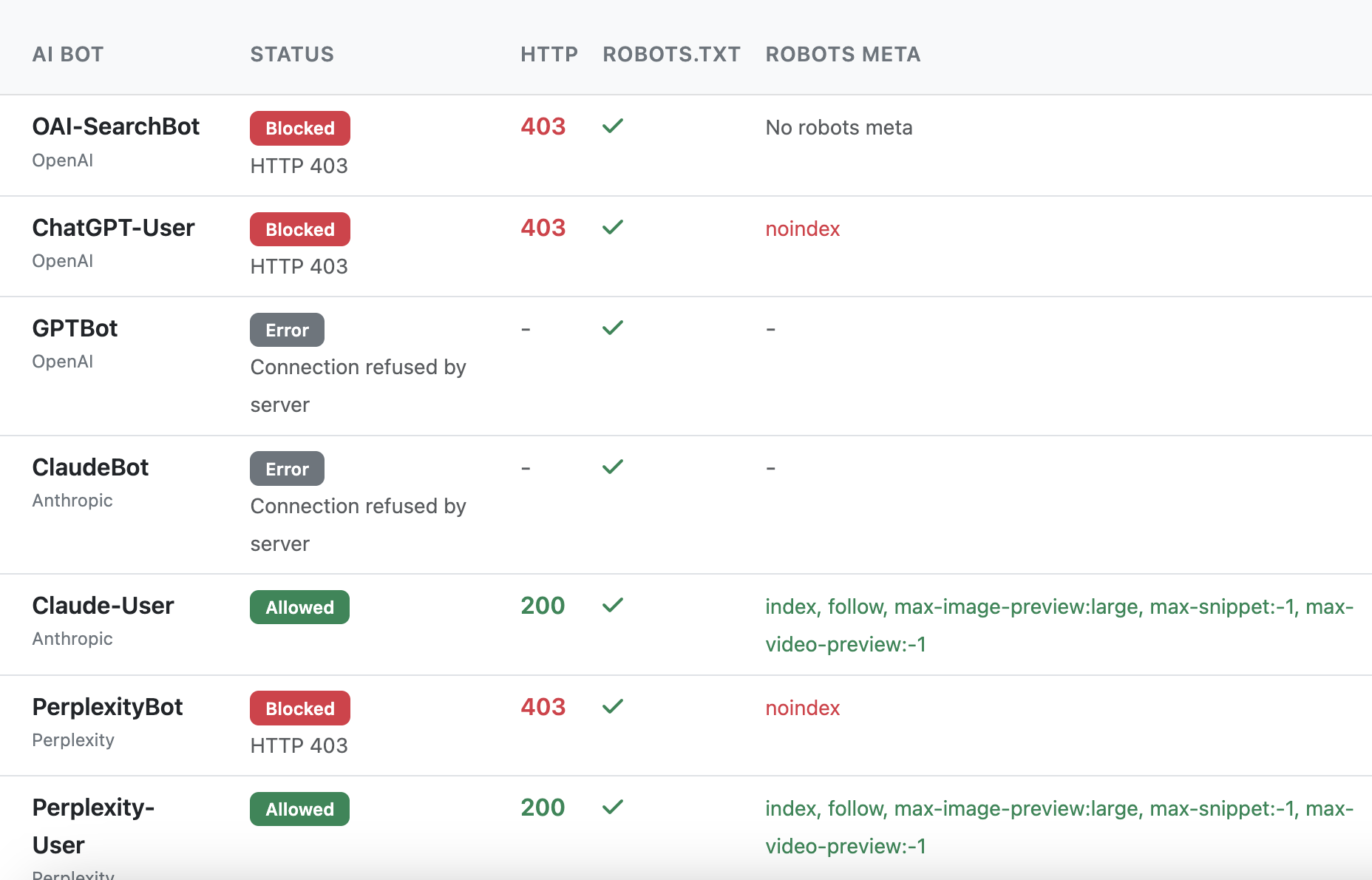
The AI bot analyzer by Max Braglia helps you quickly check if your site is blocking major AI crawlers without you realizing it.
How to fix:
Regularly check Google Search Console for crawl errors.
Use tools like Max Braglia’s AI Bot Analyzer to test for blocked AI crawlers.
Work with your hosting provider or dev team if you encounter crawling issues and fix them immediately.