Let’s do a quick roundup. Here’s what’s popped up lately in SEO and AI Search, plus how you can use it for your website’s optimization.
For business owners, these are the big 3 updates that probably matter most: Bing’s AI performance report inside Webmaster Tools, UCP-powered checkouts showing up in Google AI Mode, and ChatGPT Ads starting to roll out in the U.S.
Content List
- 1. Bing tests AI performance reporting in Webmaster Tools
- 2. Google may give websites a way to opt out of AI search features
- 3. Cloudflare will auto-convert HTML to Markdown for AI crawlers
- 4. Google cracks down on “best of” self-promotional listicles
- 5. ChatGPT rolls out ads in the U.S
- 6. Google AI Mode launches Universal Commerce Protocol-powered checkout
- More SEO and AI news
1. Bing tests AI performance reporting in Webmaster Tools
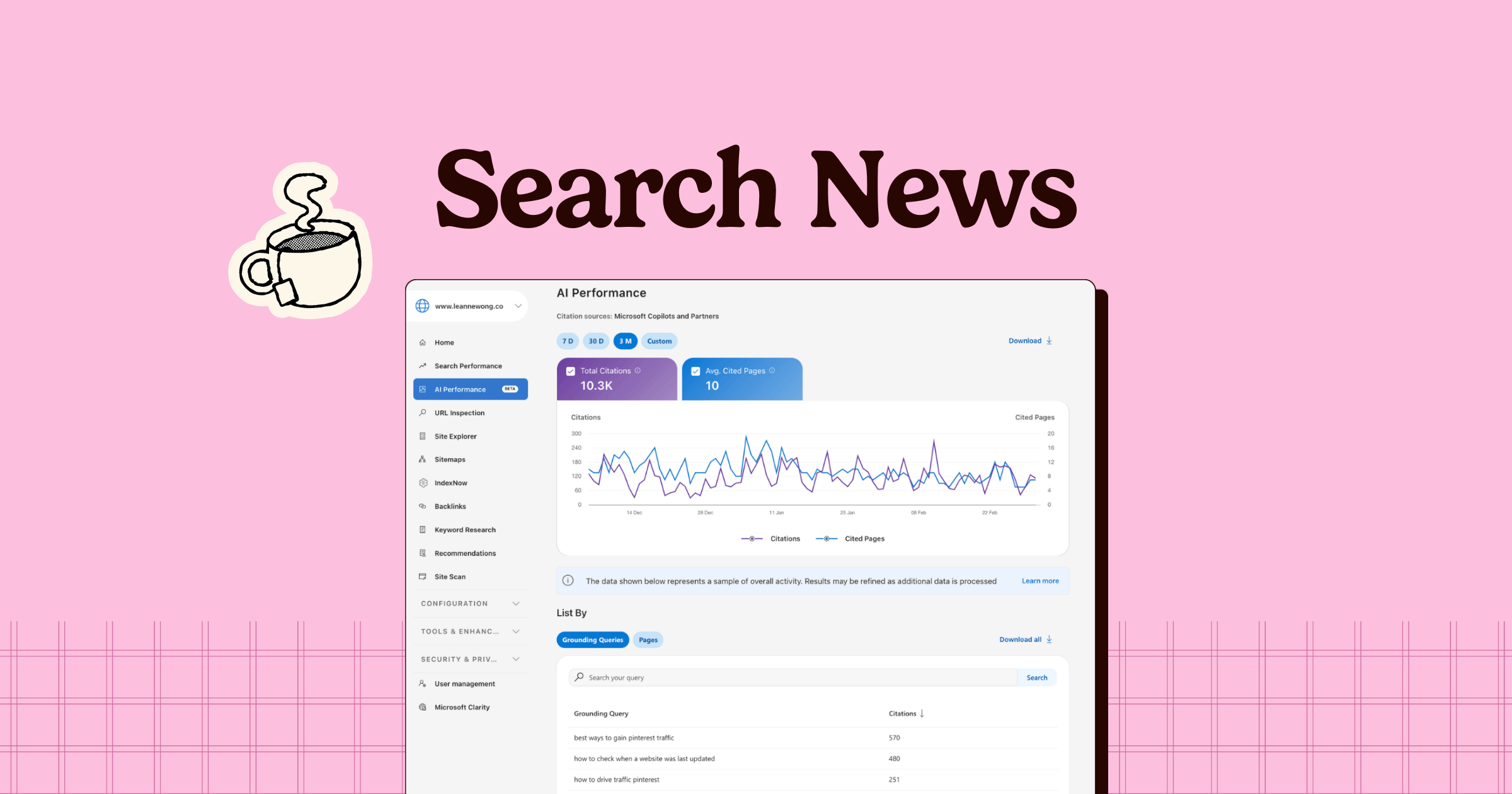
Bing has officially launched the AI performance report in Webmaster Tools. The report includes citation counts, queries, and cited pages.
Instead of measuring clicks or rankings, it shows whether your website content is used to ground AI-generated answers.
AI Performance lets you see where, and how often, your content is cited in AI-generated answers across Microsoft Copilot, Bing’s AI summaries, and select partner integrations.
If you haven’t set up Bing Webmaster Tools yet, stop what you’re doing right now and set this up asap!
Here’s what the dashboard shows:
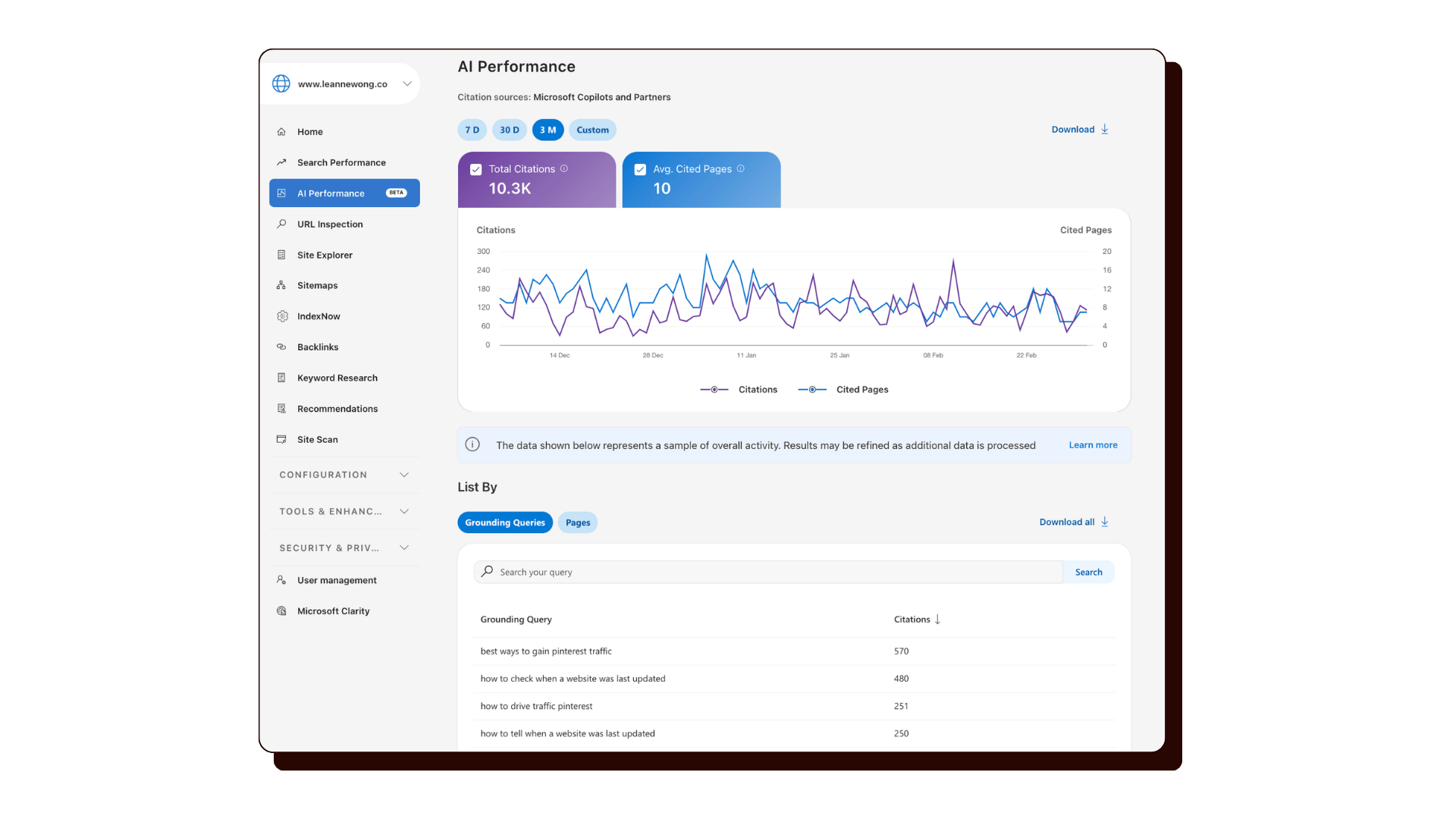
The AI Performance dashboard report metrics:
- Total citations: The number of times AI-generated answers cite your site within the selected date range.
- Average cited pages: The daily average of unique site URLs referenced across AI experiences.
- Grounding queries: Shows the key phrases the AI used when retrieving content that was cited in its answer. They are not full user questions or prompts.
- Page-level citation activity: Citation totals by URL, so you can see which pages get referenced most.
- Visibility trends over time: A timeline that shows citation volume moving up or down across AI experiences.
These numbers track how often citations happen. They don’t show ranking, placement, or how a page influenced a given AI answer.
Why we care
Knowing which pages get cited helps you spot where AI visibility comes from. However, Bing Webmaster Tools still doesn’t show how those citations lead to clicks, traffic, or any measurable business results.
Without click data, website owners can’t confirm whether these AI citations led to real value.
Still, here’s the big takeaway: we get insight about the grounding queries. Bing is trying to show the “hidden query layer” behind AI citations, even if it doesn’t tie back to clicks yet.
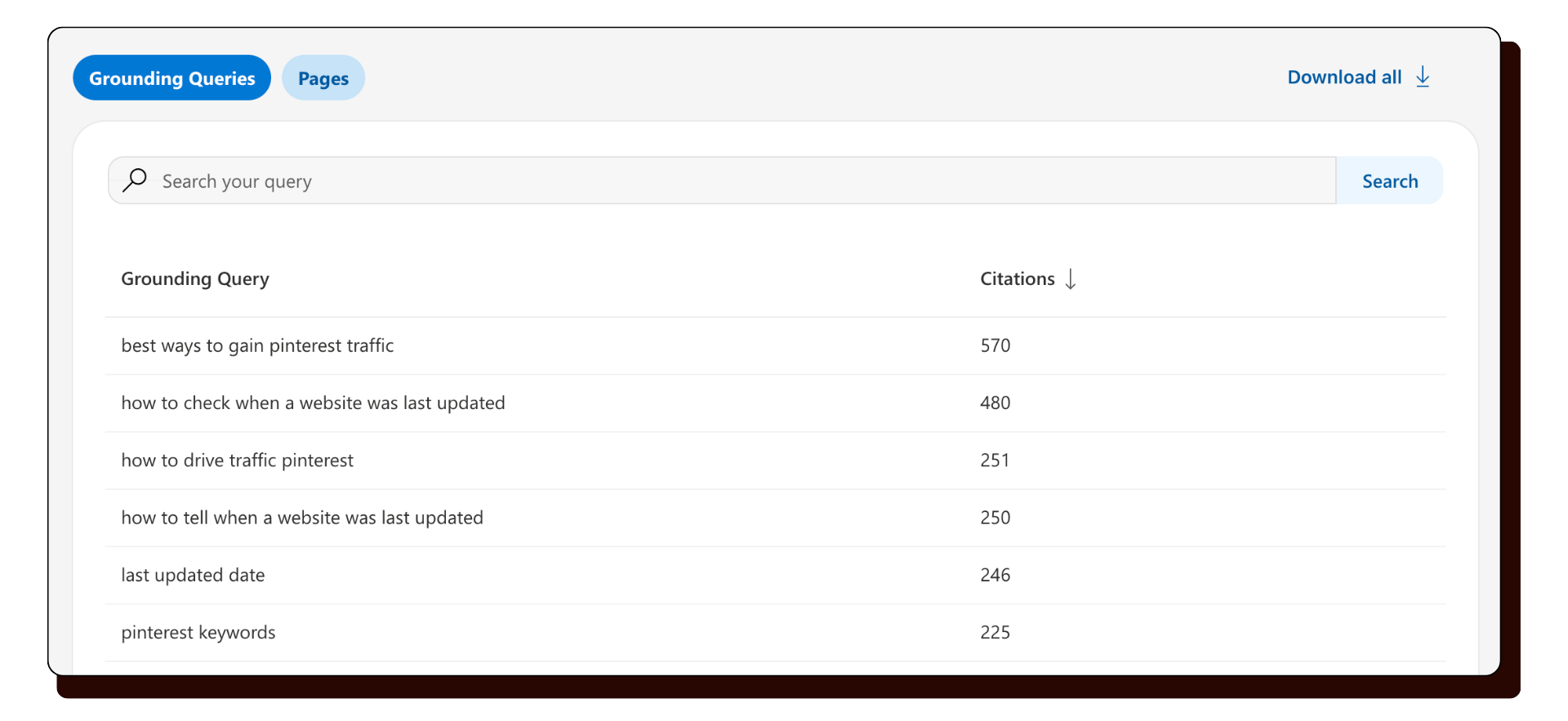
How to analyze the data
Microsoft said website owners can use the grounding query data and page-level citation activity to:
- Track the key phrases most often tied to your site when AI tools cite sources.
- Spot patterns in how AI experiences reference your content.
- Also, find where your site already shows strong AI visibility, and where it falls short.
- Review which pages get cited most often in AI-generated answers.
- Compare citation volume across pages on your site.
- Finally, see how citations spread across individual pages.
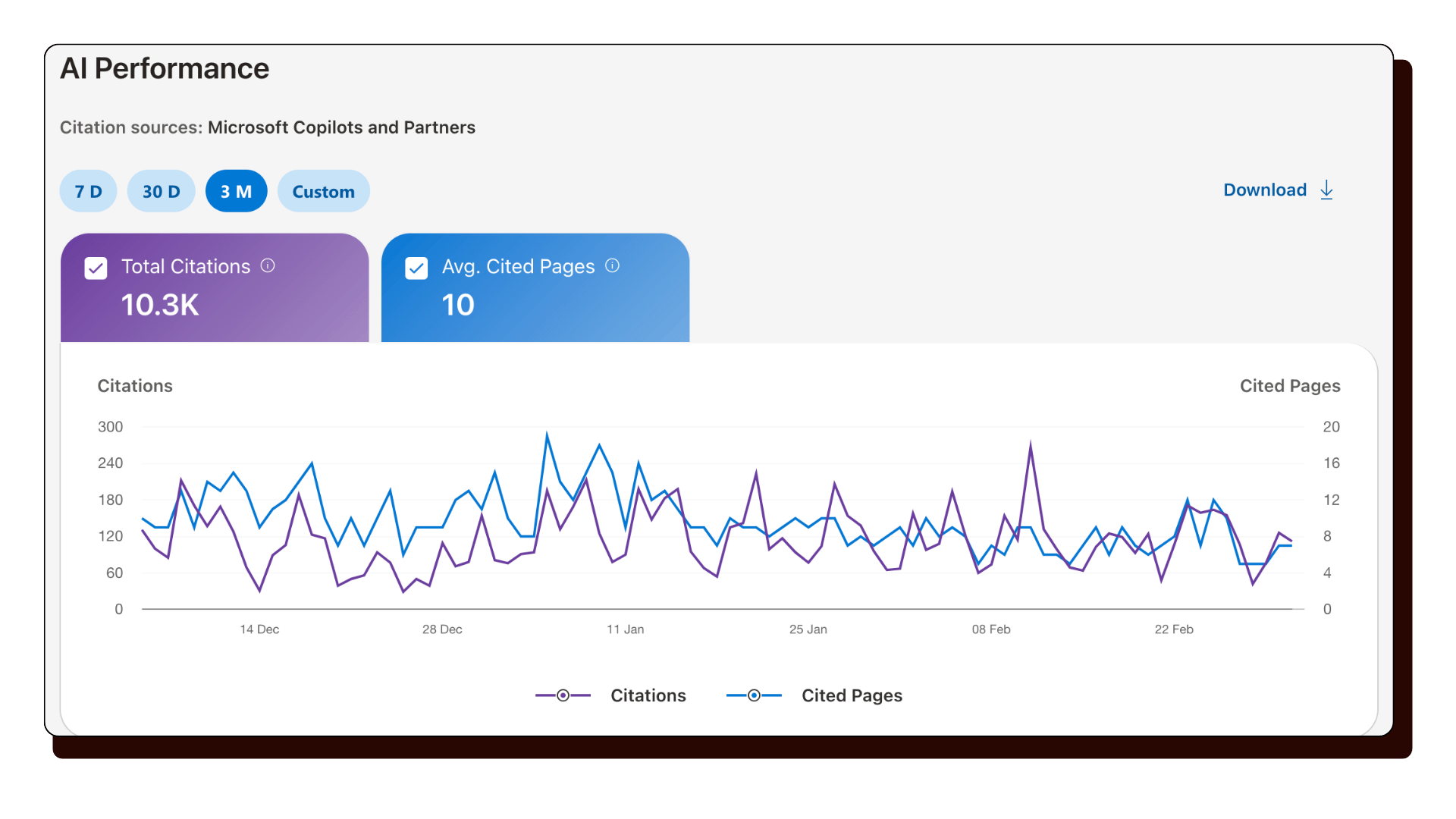
How to use the data to improve your website’s SEO and AI visibility
Here are some actionable steps Microsoft recommends we do with that data. This advice sticks to the tried-and-true stuff you already know about SEO. Use clear headings, support claims with solid evidence, keep info fresh, and keep your entities named the same way across every format (on-page text, schema, and beyond).
Align content with user intent
Check the grounding queries and linked pages for your site. This helps you see what topics your content covers in AI answers.
Build depth and show expertise
Pages that get cited across related queries usually stay focused on one topic. You can add supporting coverage in related topics, so your page content reads clearer and is more complete.
Improve clarity and structure
Use clear headings, short sections, tables, and FAQ-style blocks. This helps readers and AI systems scan and reference key details on your website faster.
Back up claims with evidence
Add examples, data points, and cited sources when you make a claim. This improves accuracy and trust when AI systems reuse your content.
Keep content current and correct
Update your pages on a schedule. That way, AI systems can pull the latest and most relevant information.
Stay consistent across formats
Make sure the text, images, and other media about your brand match. Other websites that mention you should describe the same products, entities, and terms.
2. Google may give websites a way to opt out of AI search features
Google wrote “We’re now exploring updates to our controls to let sites specifically opt out of Search generative AI features.”
This includes robots.txt and more recently, Google introduced Google-Extended, a new control that lets websites manage how their content is used to train Google’s Gemini models.
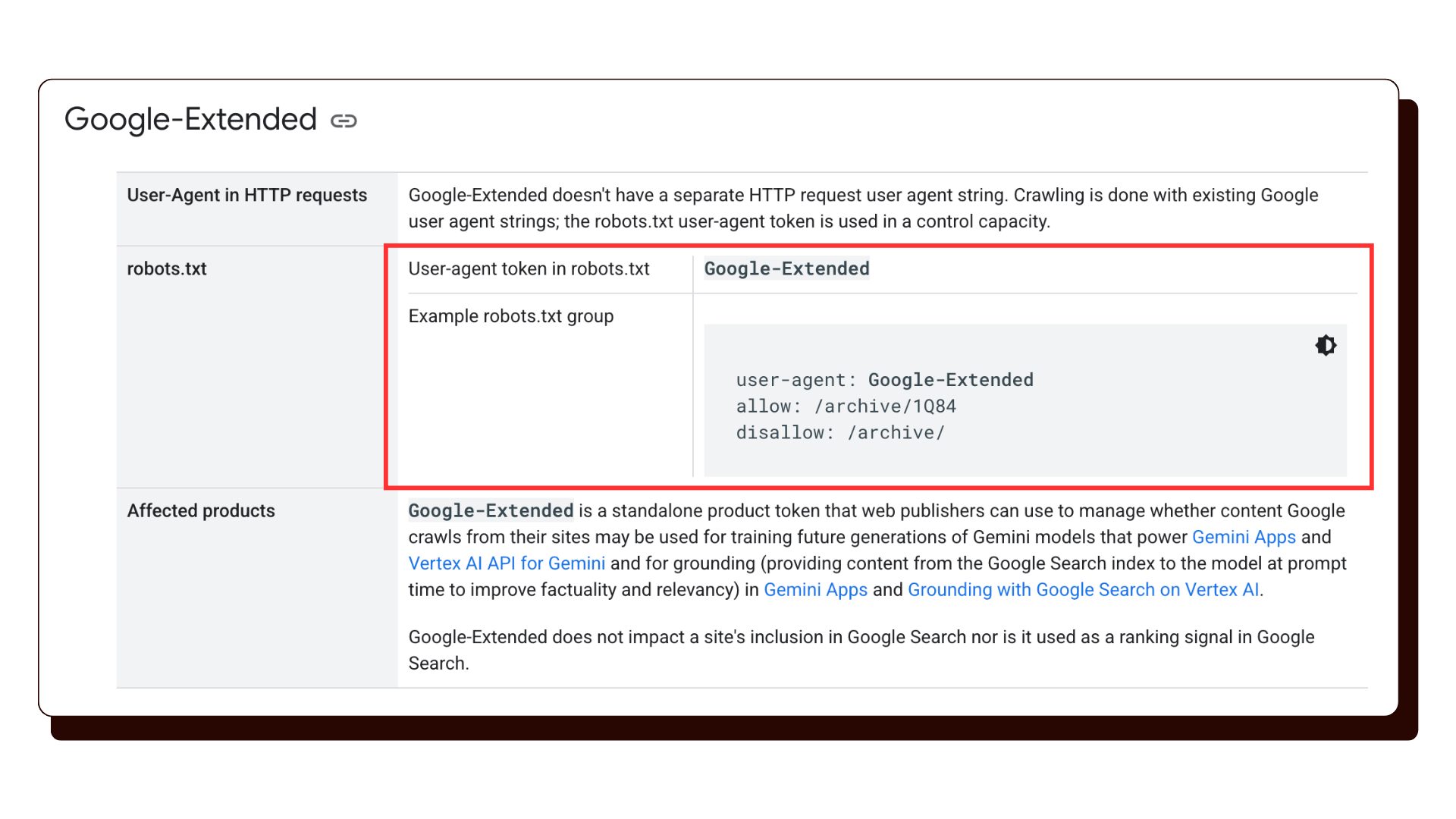
More about Google Extended here.
Publishers can choose to opt out if they don’t want Google using their content for AI features like AI Overviews, or to train AI models outside of Google Search.
Honestly, it’s about time. A lot of publishers, content creators, and site owners want a clear say in whether Google pulls their work into Search AI features, including AI Overviews and AI Mode.
These new opt-out controls should make that choice a whole lot easier. More control, less guessing, and a clearer way to decide how your content gets used in Google’s AI products.
3. Cloudflare will auto-convert HTML to Markdown for AI crawlers
Cloudflare just rolled out its new Markdown for AI Agents feature, a new opt-in feature that can serve a machine-friendly version of your web content right alongside the normal, human-facing page. Cloudflare says this is so agents can parse content more easily.
In plain terms, this Markdown feature gives AI bots structured, low-overhead text, so they can read website content faster.
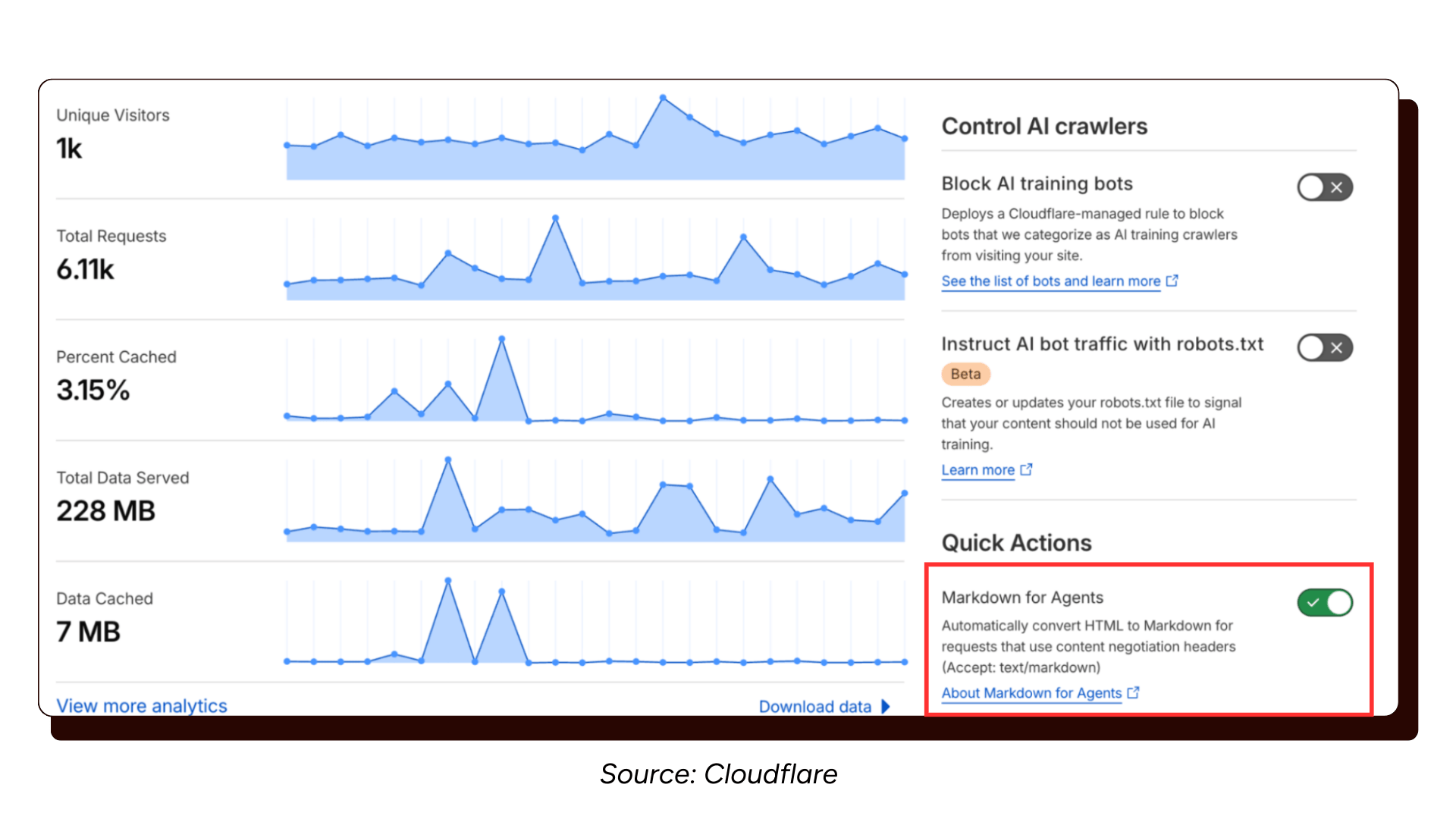
It seems that this setup doesn’t create a second URL. Instead, it can produce different representations of the same page based on request headers.
So you might have:
- A normal request that returns your usual page
- A request that asks for markdown (via Accept: text/markdown) that triggers a different flow, then Cloudflare converts and returns markdown to the AI crawler
That’s the idea, anyway.
The big worry: security and AI cloaking
Here’s where it gets tricky.
SEO consultant David McSweeney warned that Cloudflare’s Markdown for Agents could make AI cloaking way too easy. His point: the Accept: text/markdown header can get forwarded to origin servers, which acts like a giant sign that says, “Hi, I’m a bot.”
And if your origin can spot that signal, you can serve something different.
McSweeney shared an example on LinkedIn showing how:
- A normal request returns standard content
- A markdown request can trigger a different HTML response
- Cloudflare then converts that response into markdown and delivers it to the AI
The core concern is that sites could slip in hidden instructions, swapped product details, or other bot-only content, basically creating a “shadow web” for machines.
Google and Bing aren’t cheering for separate markdown
Google’s John Mueller has said large language models have handled normal web pages (HTML) from the start, so separate markdown pages don’t make much sense. He also raised the obvious question: why show machines a page that users never see, especially if systems will check whether both versions match?
I’m not aware of anything in that regard. In my POV, LLMs have trained on – read & parsed – normal web pages since the beginning, it seems a given that they have no problems dealing with HTML. Why would they want to see a page that no user sees? And, if they check for equivalence, why not use HTML?
— John Mueller (@johnmu.com) November 23, 2025 at 11:29 PM
Microsoft’s Fabrice Canel took a similar stance. He warned that separate versions can increase crawl load because engines may crawl both to compare. He also pointed out that non-user versions often end up broken or ignored, while real user-visible pages get fixed faster because humans notice issues. His bigger takeaway: search engines like structured data (Schema) in pages, and “less is more” in SEO.
Lily: really want to double crawl load? We’ll crawl anyway to check similarity. Non-user versions (crawlable AJAX and like) are often neglected, broken. Humans eyes help fixing people and bot-viewed content. We like Schema in pages. AI makes us great at understanding web pages. Less is more in SEO !
— Fabrice Canel (@facan.bsky.social) February 5, 2026 at 9:41 AM
The case against markdown (from an SEO perspective)
The moment you publish a machine-specific version of a page, you force platforms to make a choice.
Do they:
- Trust the markdown version?
- Verify it against the human-facing version?
- Ignore it because it’s risky?
Perhaps less is indeed more.
Make your website simple
If you can remove bloat, simplify templates, reduce rendering friction, and make content easier to extract, it would make it easier for both search engines and AI bots.
4. Google cracks down on “best of” self-promotional listicles
Google might finally be cracking down on the SEO and AI visibility tactic, the self-promotional “best of” listicle. That’s the takeaway from new research shared by Lily Ray, vice president of SEO strategy and research at Amsive.
The idea for “best of” listicles
Search queries that include the word “best” usually return the most recent and up-to-date results, both on Google and inside LLM answers.
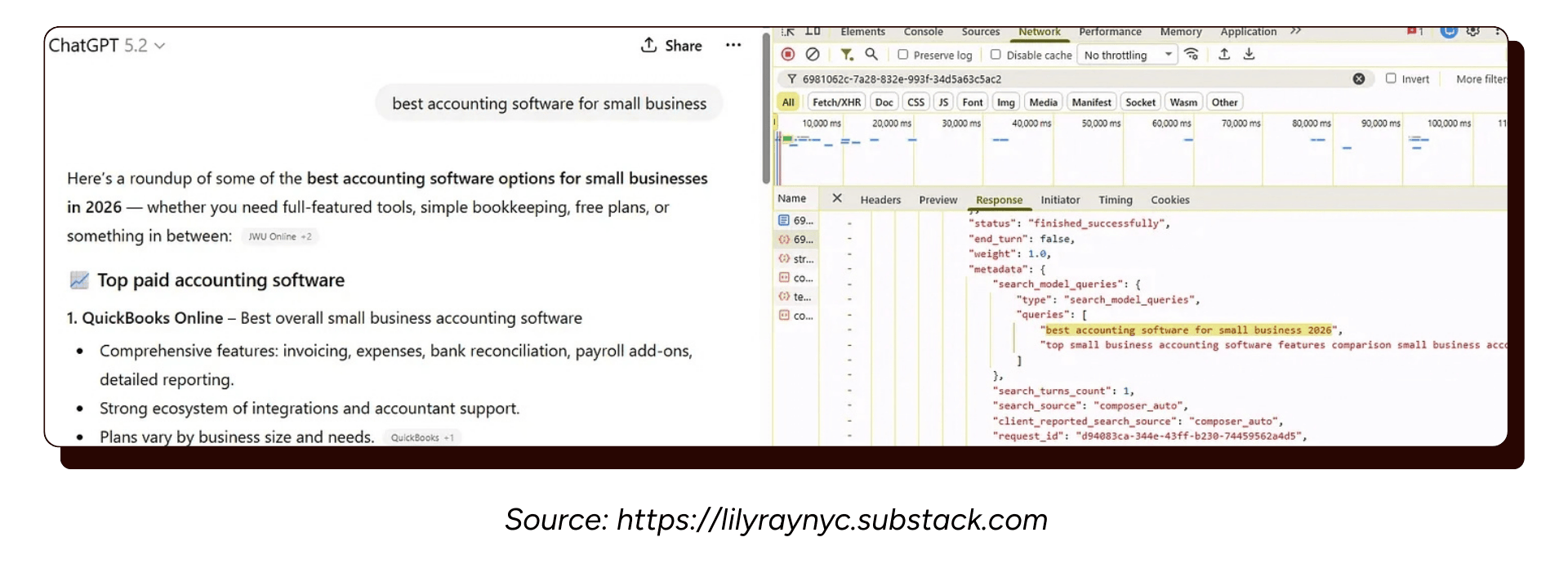
In Lily’s example, if you type “best accounting software for small business”, Google often ranks posts that were published or refreshed in the past year. At the same time, ChatGPT also tends to generate fan-out queries that add a year like 2026, so the results pull in the newest info.
Blog posts in the SaaS industry affected
The websites in this case study were from the SaaS space, and the affected content type was blog posts.
The drops appear to have started in December 2025 and were further exacerbated throughout January 2026. There was a Google core update in December 2025.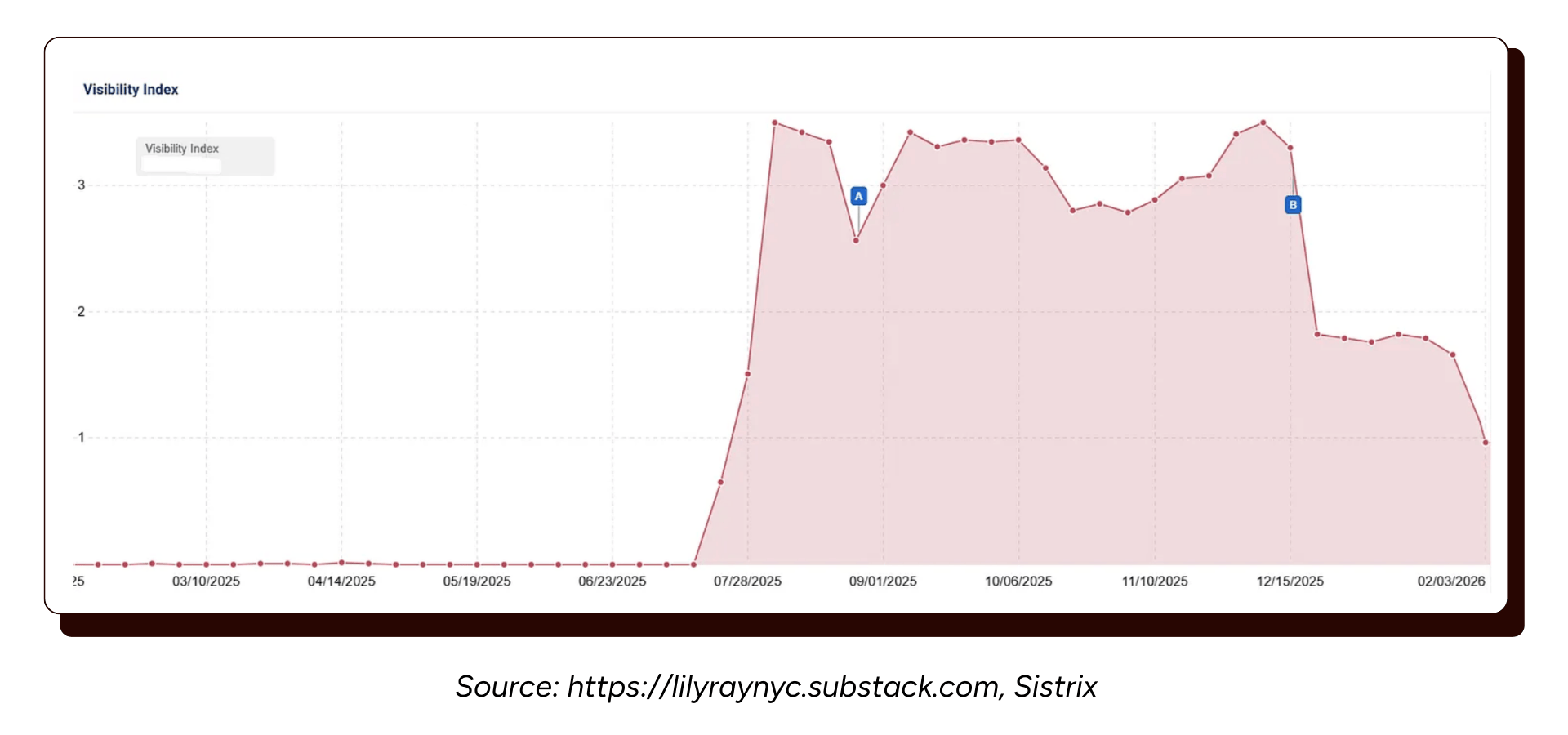
Content patterns
Here’s the pattern Lily spotted across several SaaS brands that took a hit in January.
- In some cases, organic visibility fell 30% to 50% in just weeks.
- The hits weren’t site-wide. Instead, they clustered in blog, guide, and tutorial folders.
- Those sections often had dozens (sometimes hundreds) of self-promotional listicles aimed at “best” keywords. In most cases, the brand ranked itself first.
- A lot of posts got a quick “2026” title refresh, but showed little sign of real updates.
Yes, but… it probably wasn’t only listicles.
Lily also mentioned that self-ranking “best” posts likely weren’t the only thing dragging sites down. Many of the impacted SaaS brands also showed signs of:
- rapid content output at scale
- automation
- aggressive year-based refreshes
- other high-risk SEO tactics
Still, the repeat appearance of self-promotional “best” content across the hardest-hit sites suggests this is an issue, especially when brands pump it out in bulk.
Ripple effect
Lily also pointed out the ripple effect: if Google visibility drops, that can also reduce exposure in other LLMs that pull from Google’s results. That extends past Google’s own AI products, like Gemini, AI Mode, and AI Overviews, and may also affect visibility in ChatGPT.
Why we care
Self-promotional listicles have been a shortcut, both for rankings and for showing up in AI answers. So if Google is re-checking how it treats this type of content, any plan built on “best” queries can get shaky fast.
And yes, my friend, this is the kind of thing that can look fine for months, then fall apart in a weekend. Eek!
For us – business owners chasing search visibility and AI visibility, the lesson is the same as ever: shortcuts work, until they don’t.
What to do
Google has said again and again that strong review content should include:
- first-hand experience
- original insights
- evidence that you actually evaluated what you’re reviewing
Calling yourself the “best” without independent testing, a clear method, or third-party validation often looks like a shady SEO tactic. Google doesn’t ban it outright, however, it does clash with its guidance on reviews and trust.
Google keeps saying strong reviews should show first-hand experience, original content, and proof you tested and compared options. Self-promotional listicles usually miss the mark, especially when they don’t clearly disclose bias.
5. ChatGPT rolls out ads in the U.S
Heads up, my friend, ChatGPT is getting ads.
OpenAI confirmed that it’s running its first test of ads inside ChatGPT in the U.S. A small group of users will see these sponsored placements directly in the app, which is OpenAI’s first clear move toward monetizing conversational AI.
What the ads look like (and where they show up)
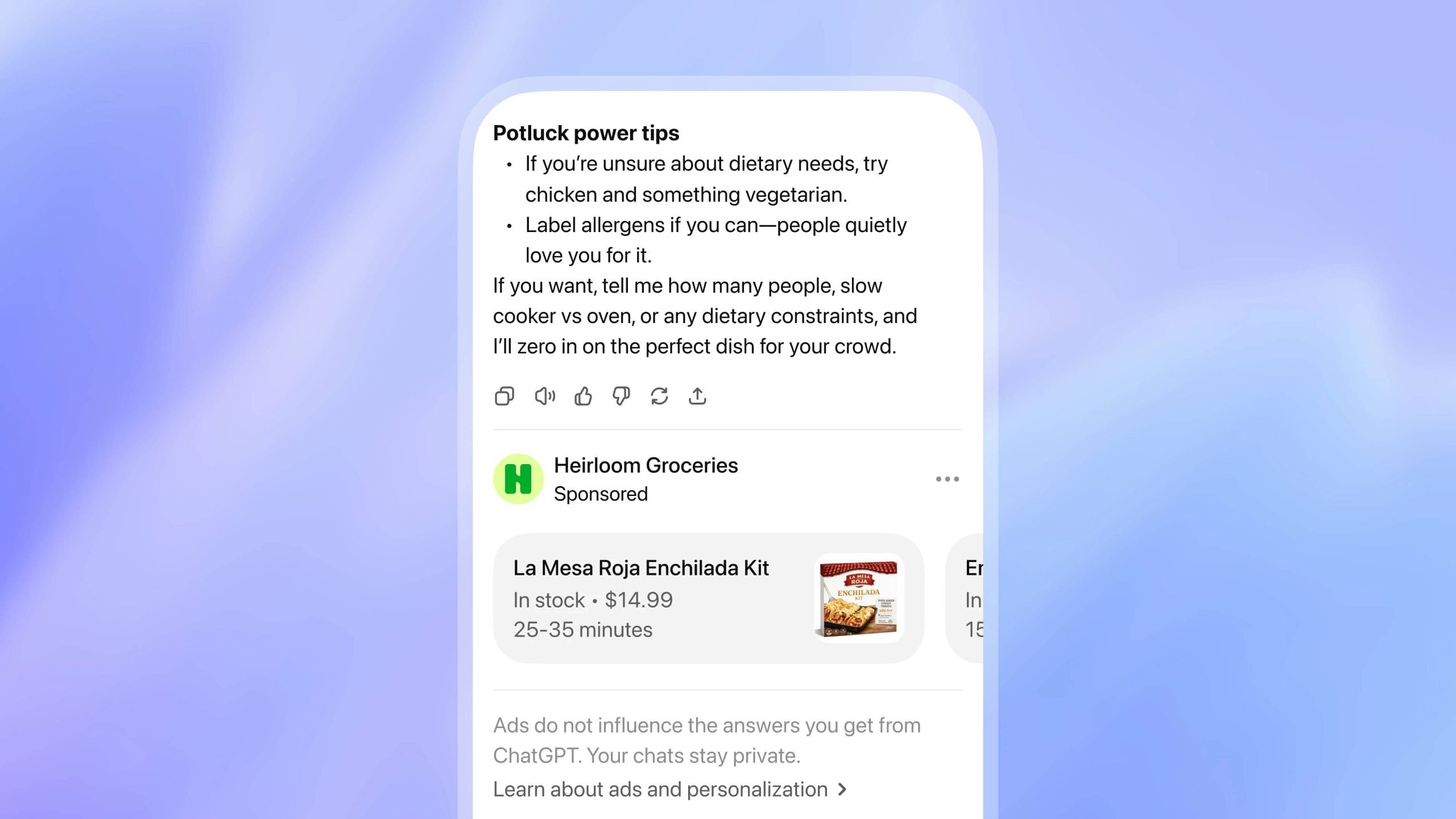
Good news, they won’t pop up inside ChatGPT’s responses.
Instead, the ads sit in a dedicated, clearly labeled area beneath the chat, so they stay visually separate from the response you’re reading.
Who will see ChatGPT ads
For now, OpenAI plans to show ads to:
- Logged-in users on the free tier
- Users on the lower-cost Go subscription
Privacy and influence rules
OpenAI says advertisers won’t get access to your conversations. Also, advertisers can’t steer or change what ChatGPT says.
Still, OpenAI will tailor ads based on what it thinks will be useful to you.
How OpenAI picks which ads you get
OpenAI matches ads using a mix of:
- Your current conversation topics
- Past chats
- Previous ad interactions
- For example, if you’re hunting for recipes, you might see ads for meal kits or grocery delivery. If more than one advertiser fits,
OpenAI plans to show the most relevant option first.
Your controls
You get detailed controls over the ad experience, including the ability to:
- Dismiss ads
- View and delete separate ad history and interest info
- Turn personalization on or off
- If you switch personalization off, OpenAI limits ads to the current chat.
Free users also get another option: opt out of ads, but accept fewer daily messages, or upgrade to a paid plan.
Why we care
ChatGPT is one of the biggest consumer AI products on the planet. So this could change how conversational AI gets monetized, and how businesses can reach people inside AI chat tools.
6. Google AI Mode launches Universal Commerce Protocol-powered checkout (e-commerce should pay attention)
Google launched the Universal Commerce Protocol, or UCP, on January 11th, 2026.
TLDR;
What? UCP matters for e-commerce websites. This is an open standard that lets AI agents work across the entire shopping journey, from discovery to purchase to post-sale support. Google built UCP with platforms like Shopify, Etsy, Wayfair, Target, and Walmart, and it connected payment networks from day one.
Why we care? Google sees agentic shopping as inevitable, and wants to keep AI-driven commerce open and ensure retailers stay in the loop as agents take over the buying journey, often before a shopper ever reaches a retailer’s site.
Make purchases in Google AI Mode
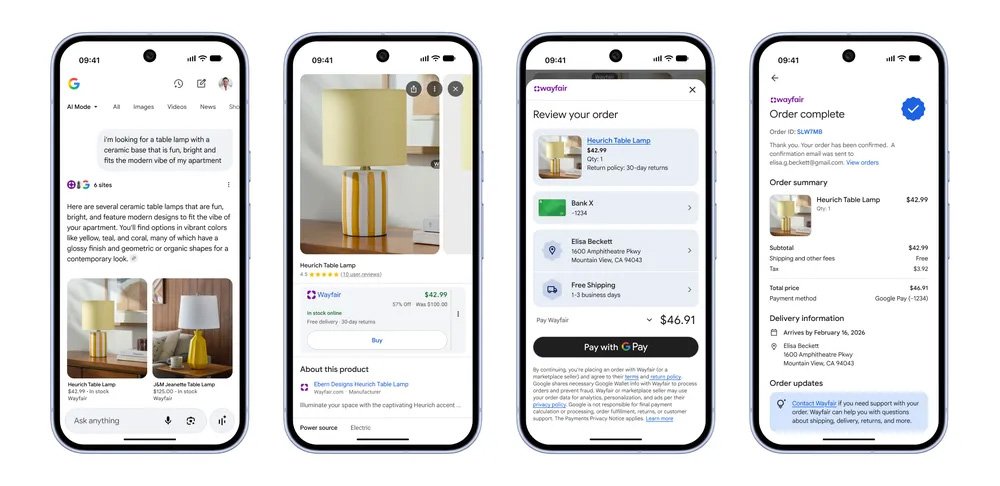
UCP-powered checkouts are now live in Google AI Mode in the US. This means US shoppers can now buy items from Etsy and Wayfair, right in Google’s AI Mode.
Brodie Clark shared on X his experience with UCP-powered checkout for the first time in Google’s AI Mode shopping results.
A prominent ‘Buy’ button appears on the item, allowing you to purchase it directly from search results.
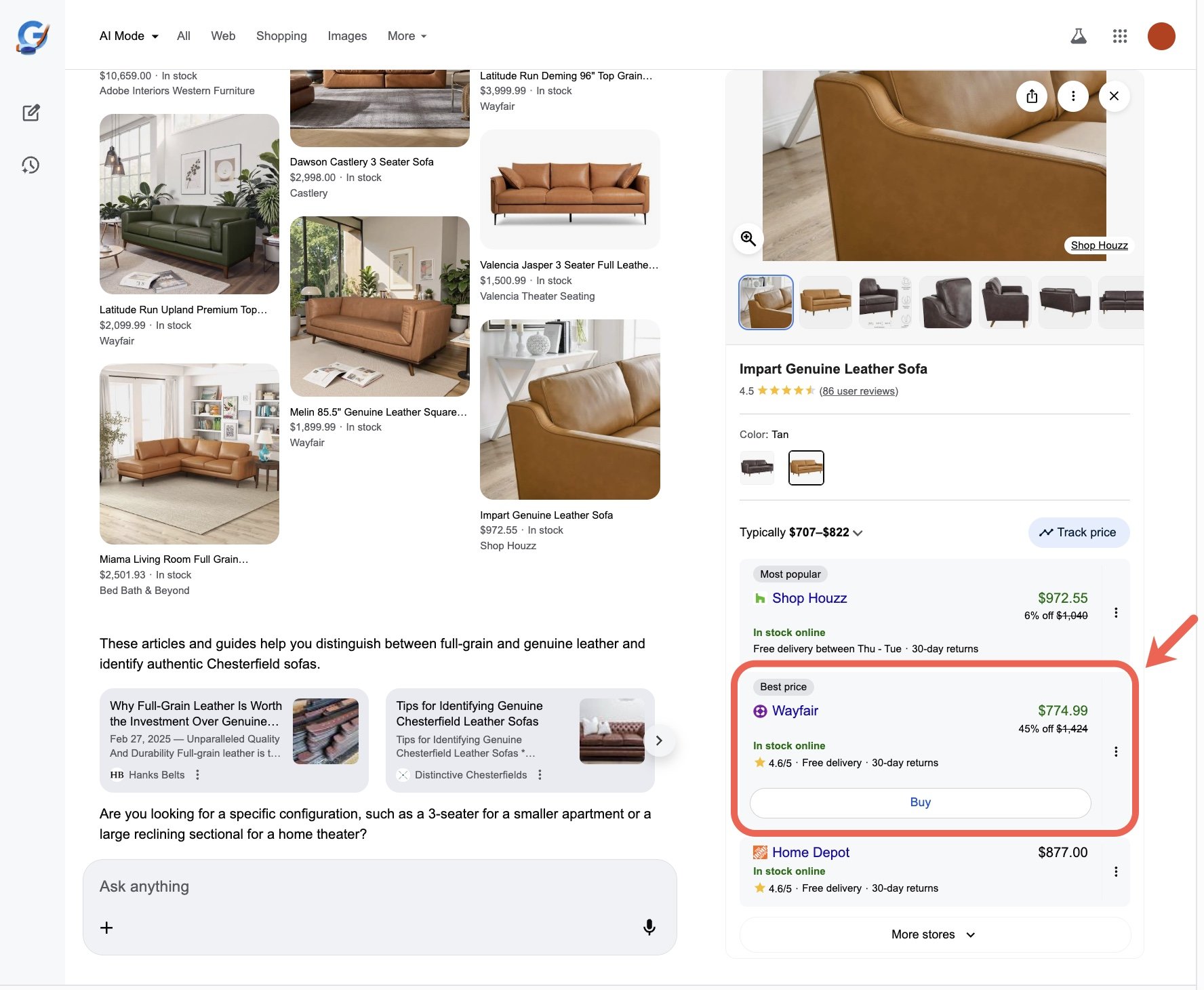 Source: https://x.com/brodieseo/status/2021823121784025280
Here are Google’s screenshots showing a step-by-step view of the UCP-powered shopping journey:
What we can do
The opportunity here for e-commerce is product feed optimization, setting up Business Agent in the Merchant Center, and structured data.
- Product feed optimization. Ensure Title, description, product type, Google product category, GTINs, MPNs, brand identifiers, and images are complete and accurate. Have price accuracy, availability and inventory status, shipping and return information.
- Activate Business Agent in Merchant Center. This allows your brand to show up in AI conversations, train the agent on product features, and enable direct purchases within the chat experience.
- Implement schema. Ensure website schema markup matches Merchant Center data. Product schema, offer schema, and review schema all contribute to AI understanding.
A few more SEO and AI Search items that came up:
- OpenAI may charge ads based on impressions, not clicks, which is a throwback to older display economics.
- ChatGPT’s market share shrinks as Gemini surges. OpenAI’s ChatGPT market share fell from 69.1% in January 2025 to 45.3% in 2026, while Google’s Gemini chatbot app increased its market share from 14.7% to 25.2%.
- According to web traffic data from Similarweb, Gemini.google.com, increased with 28.38% more traffic in December 2025, while ChatGPT’s traffic declined 5.59%.
- The UK announced a Meta-backed AI team for public service work.
- Yahoo launched Scout, an AI answer agent.
- Bing multi-turn search is available worldwide, and long-tail queries may benefit. As you scroll, a Copilot box appears at the bottom so follow-ups build on the last query.
- WordPress.com has a Claude connector.
- Google shipped a February 2026 Discover-related update, and it sounds like they’re splitting “core” concepts into separate systems.
- Opus 4.6 released.
- Grokpedia saw declining Google visibility, possibly because some pages generate on the fly and don’t persist, so crawlers may treat them as gone.
- Google announced WebMCP, a new protocol for AI agent interactions. Great articles about this about how it affects technical SEO from Dejan, Google, and the early preview program for developers.