Let’s do a quick roundup of the latest SEO and AI Search news in March 2026, and how you can use it for your website’s optimization.
For business owners, these are the big 3 updates that probably matter most:
- 🚨 Google rolled out a combo March Core + Spam update to tackle spam on the search results and surface more helpful websites. This is the time to start checking your SEO rankings and traffic.
- 📊 Bing added a new AI performance report that connects Grounding Queries and Cited Pages. This is so awesome, imo!
- 🛒 Shopify: Millions of merchants can now sell to ChatGPT users via Agentic Storefronts. Agentic Storefronts give merchants access to major AI channels, ChatGPT, Microsoft Copilot, AI Mode in Google Search, and the Gemini app, managed centrally from the Shopify Admin.
Search Academy members can get full coverage in their members’ area and additional ChatGPT optimization and AIO strategies in the AI Search Vault.
Last month’s SEO and AI News update can be found here.
Content List
- 1. March 2026 Google Core Update is now rolling out
- 2. Bing Webmaster Tools AI Performance Reports now add grounding queries to pages
- 3. Shopify: Millions of merchants can sell in AI chats
- 4. Google Search Console, Maps, and AI Shopping all got useful updates
- 5. New Google patent hints that it could replace traditional search results with AI-generated landing pages
- 6. Golden nuggets in Google’s Liz Reid’s interview
- 7. WordPress.org now serves markdown output for AI agents and developers
- More SEO and AI news
1. March 2026 Google Core Update is now rolling out
Google has started the March 2026 core update on March 27th.
This is the first core update of 2026. It comes right after Google’s 24th March 2026 spam update, which launched a few days ago, and the February 2026 Discover update.
Today we released the March 2026 core update. We’ll update our ranking release history page when the rollout is complete: https://t.co/tBENzbTqB2
— Google Search Central (@googlesearchc) March 27, 2026
Marie Haynes predicted that the Spam update was preparation for a core update, and she was spot on!
What Google said
Google posted the following on its Search Status Dashboard: “Released the March 2026 core update. The rollout may take up to 2 weeks to complete.”
They also shared this note on LinkedIn: “This is a regular update designed to better surface relevant, satisfying content for searchers from all types of sites. The rollout may take up to 2 weeks to complete.”
What to know about Google core updates
Google rolls out core updates several times each year. These updates bring broad changes to Google Search ranking systems and algorithms, so Google usually announces them publicly. Here’s the official guideline and recommendations about core updates.
Core updates often cause sharp movement in Google Search rankings and visibility. As a result, some sites gain traffic, while others lose ground.
For site owners, publishers, and SEO teams, this update could improve or reduce rankings. In the best case, it rewards useful content and raises your rankings.
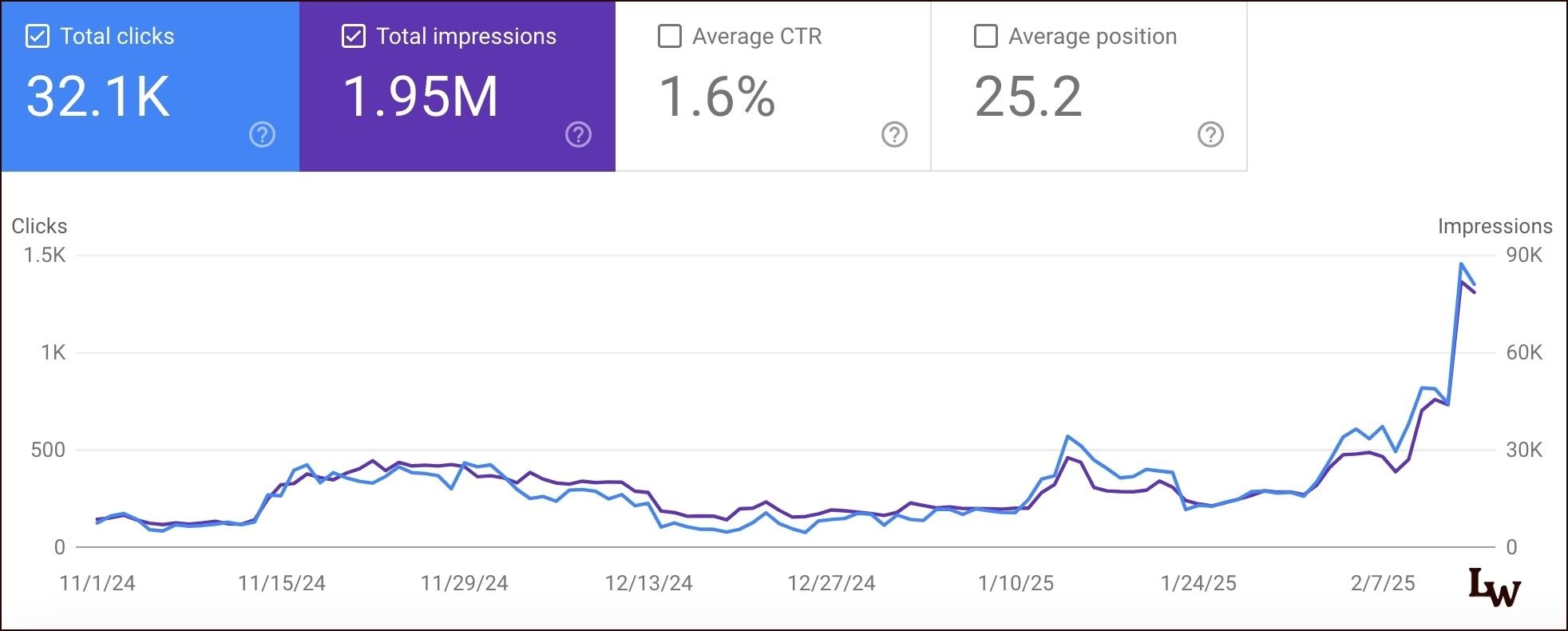
Here’s a screenshot of how the search results changed between core updates in 2025. Notice how some websites decline in rankings and some move up the SERPs? This is Google’s core update taking effect.
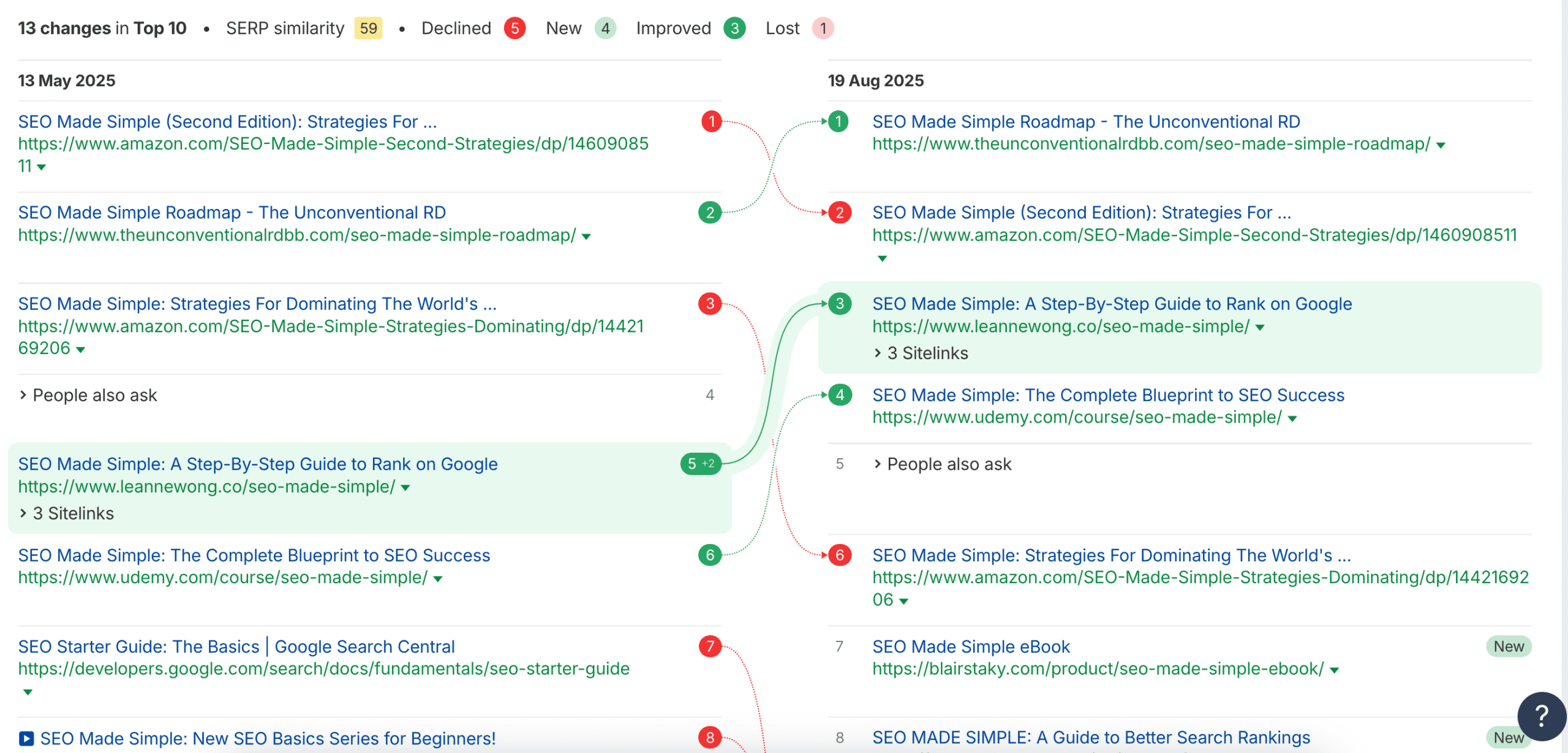
Google re-shuffling the search results and surfacing new, useful content on SERPs. If you’ve worked on your website SEO in the last 3 months, you might see improvements in rankings.
Core updates are not always a bad thing.
What to do if your site is affected
Google did not publish any new advice tied only to the March 2026 core update. However, its past guidance still applies if rankings drop after a core update.
Here are the main points:
- There is no single fix for recovering from a core update.
- Lower rankings do not always mean something is wrong with your pages.
- Google has shared a set of questions site owners should review after a core update.
- Some sites recover between updates, but the biggest shifts often happen after the next core update.
- In short, create helpful content for people, not content built only for search engines.
We’ve successfully worked with website owners to recover rankings and traffic after an algorithm update. Check out our case study over here.
2. Bing Webmaster Tools AI Performance Reports now add grounding queries to pages
We can now see which pages are being cited for a specific grounding query, and which grounding queries are driving citations to a specific page.
[New] Grounding Query – Page Mapping
Microsoft added this new functionality to its Webmaster Tools’ AI Performance report, which lets us quickly see which pages a grounding query cites, and which grounding queries send citations to a given page.
Here’s how you can find your website’s grounding query – page mapping data in Bing’s AI report:
- Go to Bing’s Webmaster Tools > AI Performance
- Scroll to the List by table below
- You can filter the data by Grounding Queries or Pages
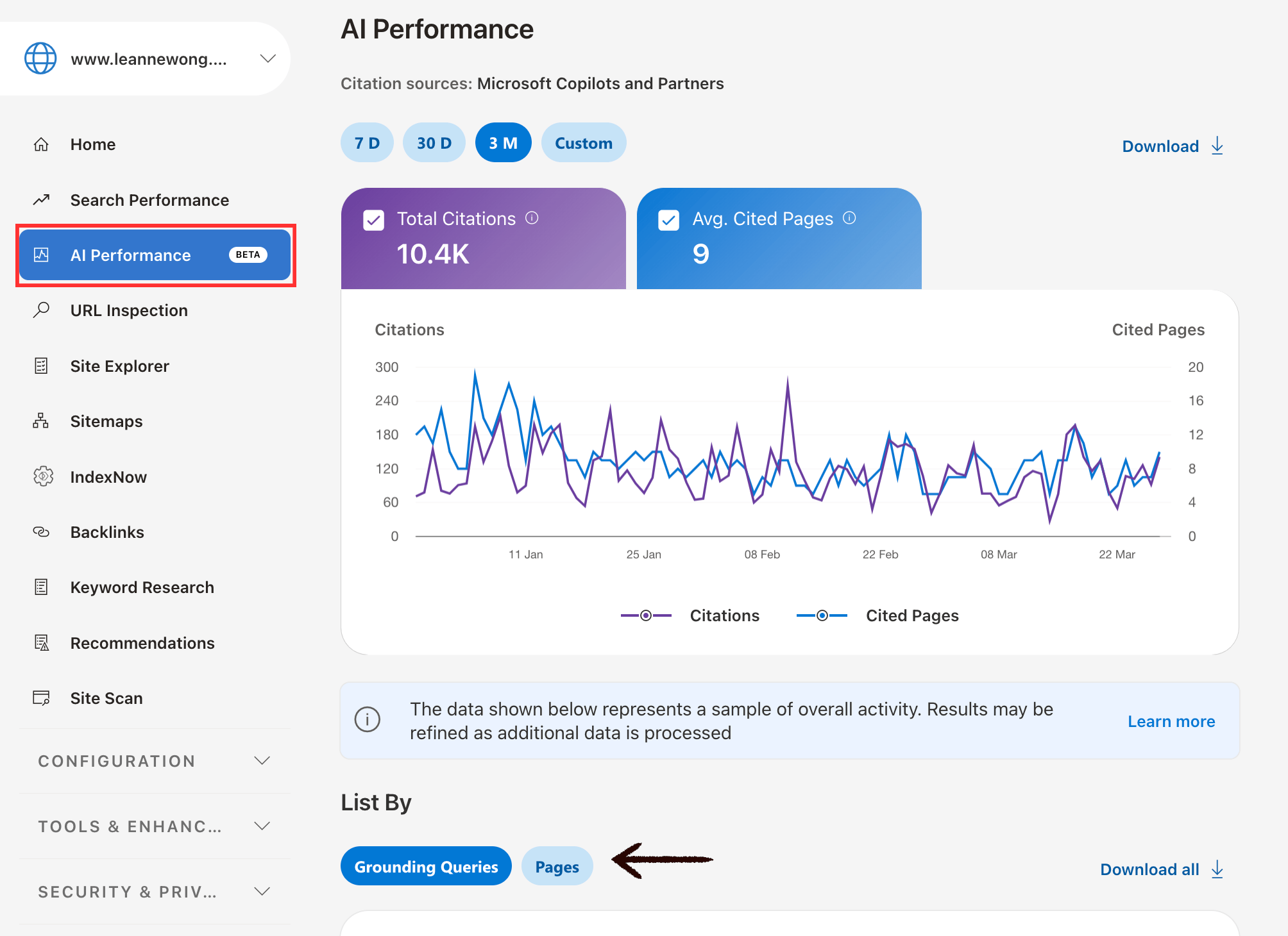
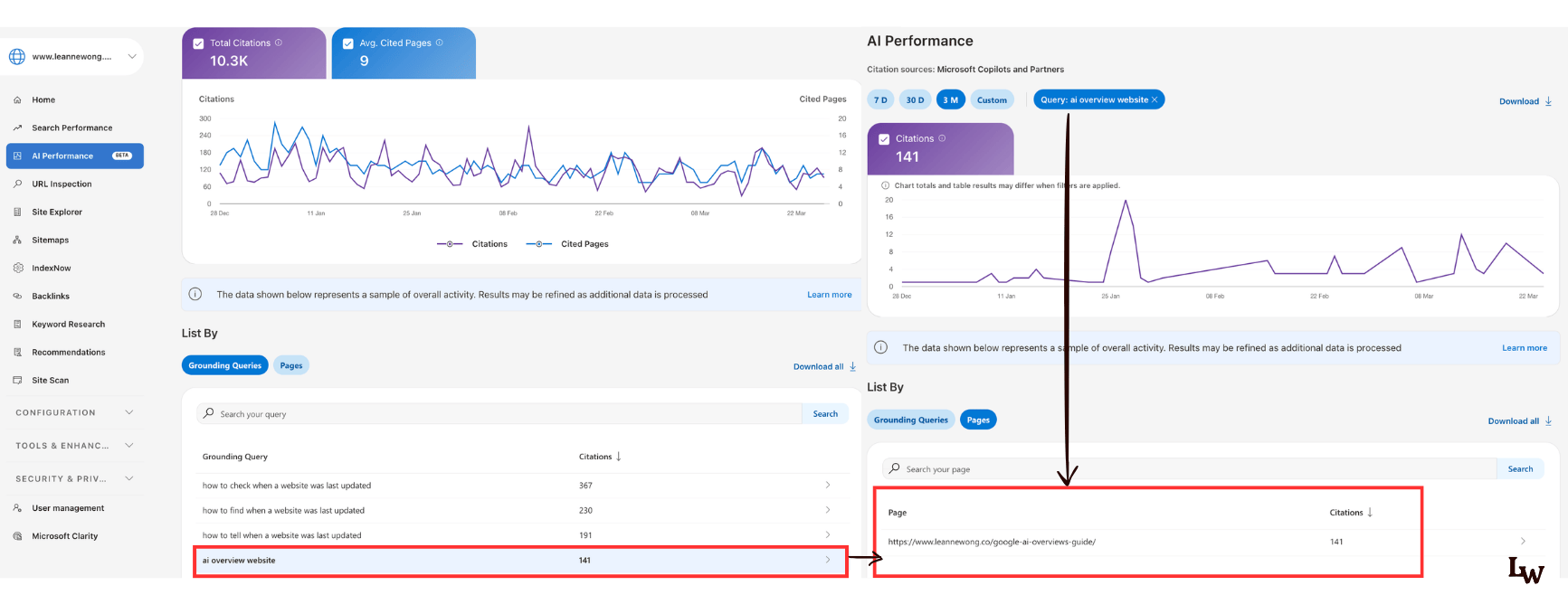
You can select a grounding query to view its cited pages, or choose a page to see its related grounding queries. Also, keep in mind that one grounding query can map to multiple pages, and one page can map to multiple grounding queries.
To see which pages are being cited for a specific grounding query
- Click on a specific grounding query, and it’ll take you to the pages the query cited
To see which grounding queries are driving citations to a specific page
- Click on a specific page, and it’ll take you to all the grounding queries that sent citations to a given page
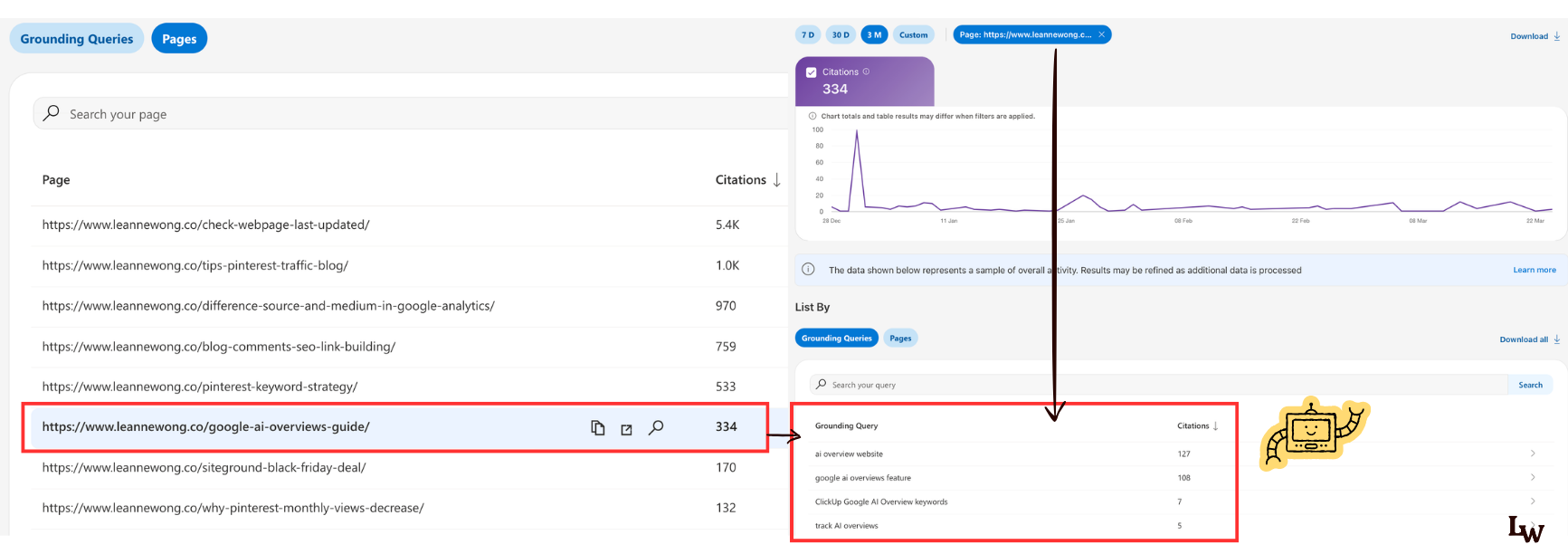
YEP, this is super useful. Because for the first time, we can finally see why a page gets cited and for which grounding queries.
Instead of guessing which content pages on your website drive AI visibility, you can now see exactly which grounding queries triggered citations to a page and optimize further.
In Search Academy, we have an AI Search Vault that teaches you ChatGPT optimization and AIO strategies to increase your AI visibility and citations.
3. Shopify: Millions of merchants can sell in AI chats
This week, Shopify launched what it’s calling Agentic Storefronts. A system that automatically makes your products available inside major AI platforms, including ChatGPT, Google’s Gemini app, Microsoft Copilot, and Google’s AI Mode in Search.
What this means
Your products are now inside ChatGPT, Google’s AI Mode, and other AI chat plaforms. Hundreds of millions of ChatGPT users can now discover and buy from Shopify merchants without leaving the chat.
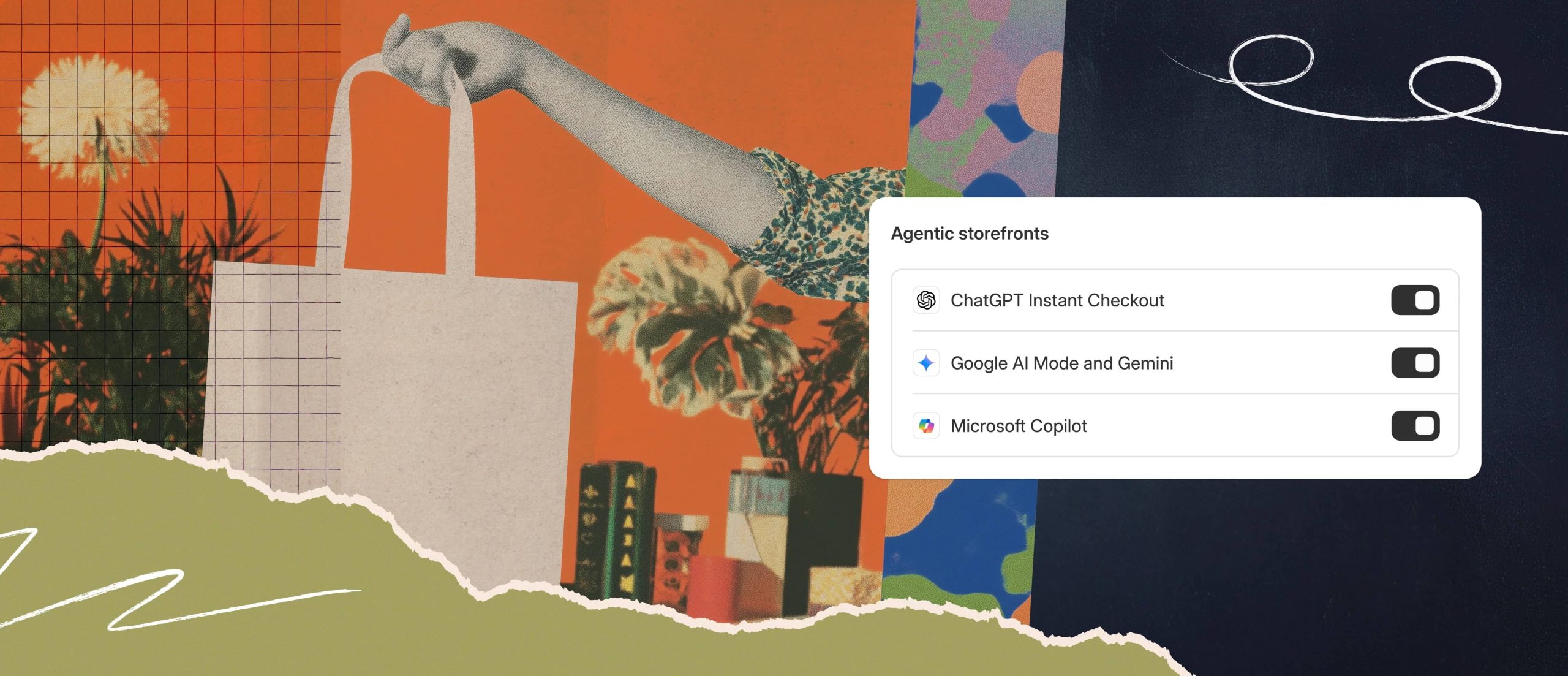
When someone asks ChatGPT for a product recommendation, Shopify’s catalog feeds into those results.
No extra apps, no separate integrations, no additional transaction fees. Shopify merchants get instant access to these AI channels through Agentic Storefronts in the admin.
So make sure your product data is accurate and up to date. AI platforms surface products based on the quality and accuracy of that structured data. Clean, real-time, well-organized product information gets recommended. Messy or outdated data gets passed over.
You don’t have to figure out how to integrate with ChatGPT or Gemini individually.
Agentic Storefronts are built into the Shopify Admin, and your products are already being syndicated across AI channels. You don’t need to build anything or hire a developer.
Products stay synchronized across surfaces, with real-time inventory and pricing.
Shopify does it for you, centrally, and you manage it from one place.
Commerce is no longer just happening on websites.
It’s happening in chat windows, in search results, in productivity tools. ChatGPT isn’t used just to answer questions, but can help people make decisions. What to buy, where to find it, what’s the best price.
What you should do:
- Check your product data. Make sure product titles, descriptions, pricing, and inventory on your Shopify website are accurate. This is what AI agents read.
- Look at your referral attribution in the admin. Shopify is tagging orders that come from ChatGPT and other AI channels, so you can see exactly where sales are coming from.
- Make sure your checkout experience is clean. Customers completing purchases through AI channels still go through your checkout. Friction there is still friction.
4. Google Search Console, Maps, and AI Shopping all got useful updates
Google Search Console now separates branded and non-branded queries
Google Search Console has started rolling out a branded versus non-branded filter. For many SEOs, this is something we were already approximating with manual analysis. Still, having it built into the interface saves time.
One way to use it: If there are obviously branded searches appearing under non-branded queries, this might reveal confusion around brand recognition or naming.
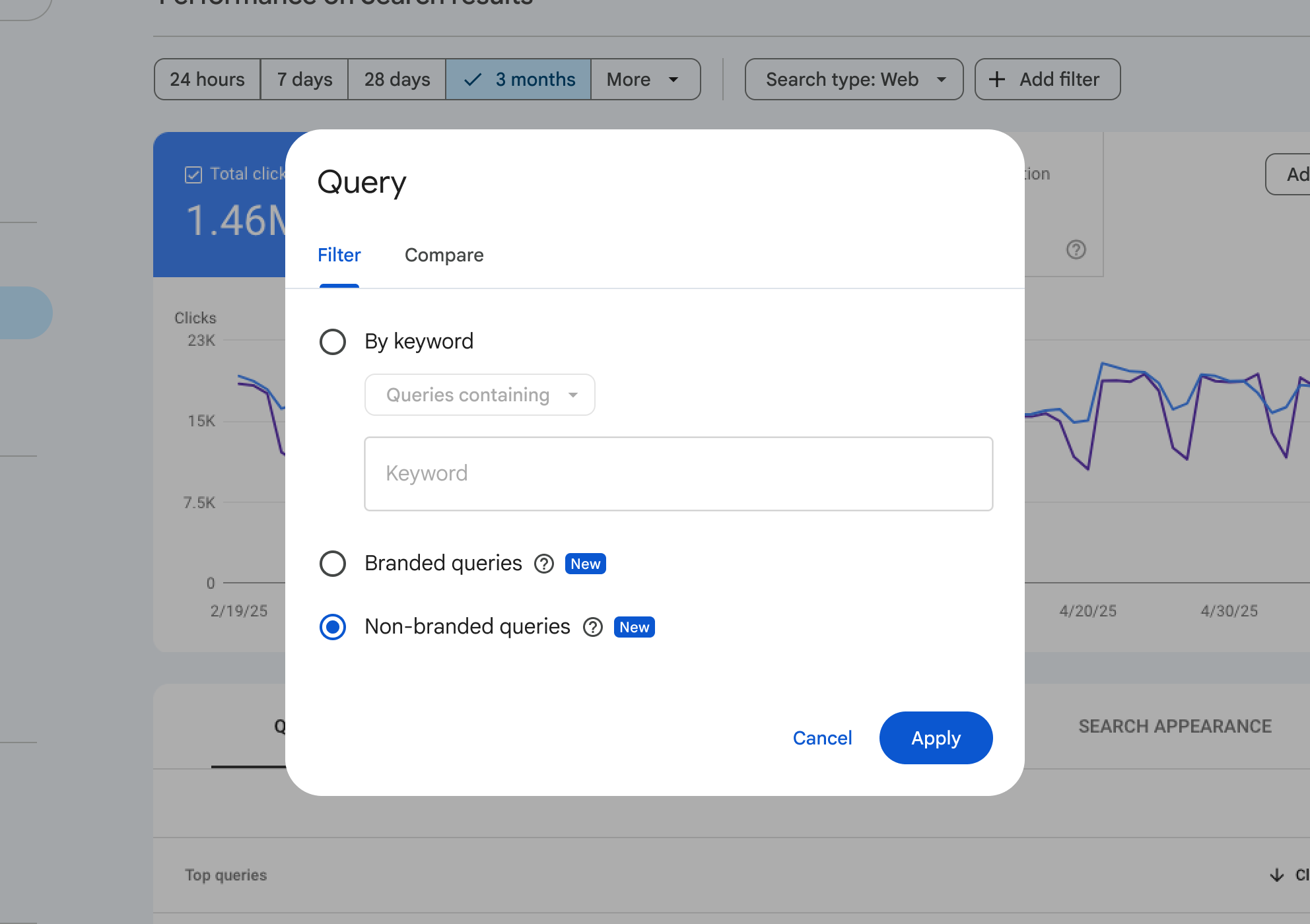
The data currently appears to be limited at first, with only a few months of history in some cases, so this is still early.
Google Maps just got an upgrade with Gemini
Google Maps is also changing. The new Gemini-powered “Ask Maps” feature will let you have an AI conversation about where you’re going.
“Ask Maps,” powered by Gemini, AI, is a new conversational feature in Google Maps that allows users to ask complex questions about locations, discover places, and plan trips. It is rolling out now on Android and iOS in the US and India.
Google makes AI-powered online shopping easier with Universal Commerce Protocol updates
For e-commerce, the Universal Commerce Protocol (UCP) update is one of the most actionable news this month.
What is UCP?
The Universal Commerce Protocol is an open standard (think of it like a common language) that lets AI shopping agents interact with retailers’ websites in a standardized way — so an AI assistant can browse, compare, and buy on your behalf across many different stores.
What’s new this month?
- Cart management: AI agents can now add multiple items to a cart from a store in one go, mimicking how a human shopper would naturally shop.
- Real-time catalog access: AI agents can now look up live product details like pricing, inventory, and variants (e.g., sizes/colors) directly from a retailer’s system, so the info is always up to date.
- Identity Linking: When you’re logged in on a UCP-integrated platform, the AI agent carries your loyalty status and member perks (like free shipping or member pricing) over to the retailer — so you don’t lose benefits just because you’re shopping through an AI.
Here’s Google’s update on this.
Google is also making it easier for retailers of all sizes to plug into this system via Google Merchant Center, and big commerce platforms like Salesforce, Stripe, and Commerce Inc are signing on.
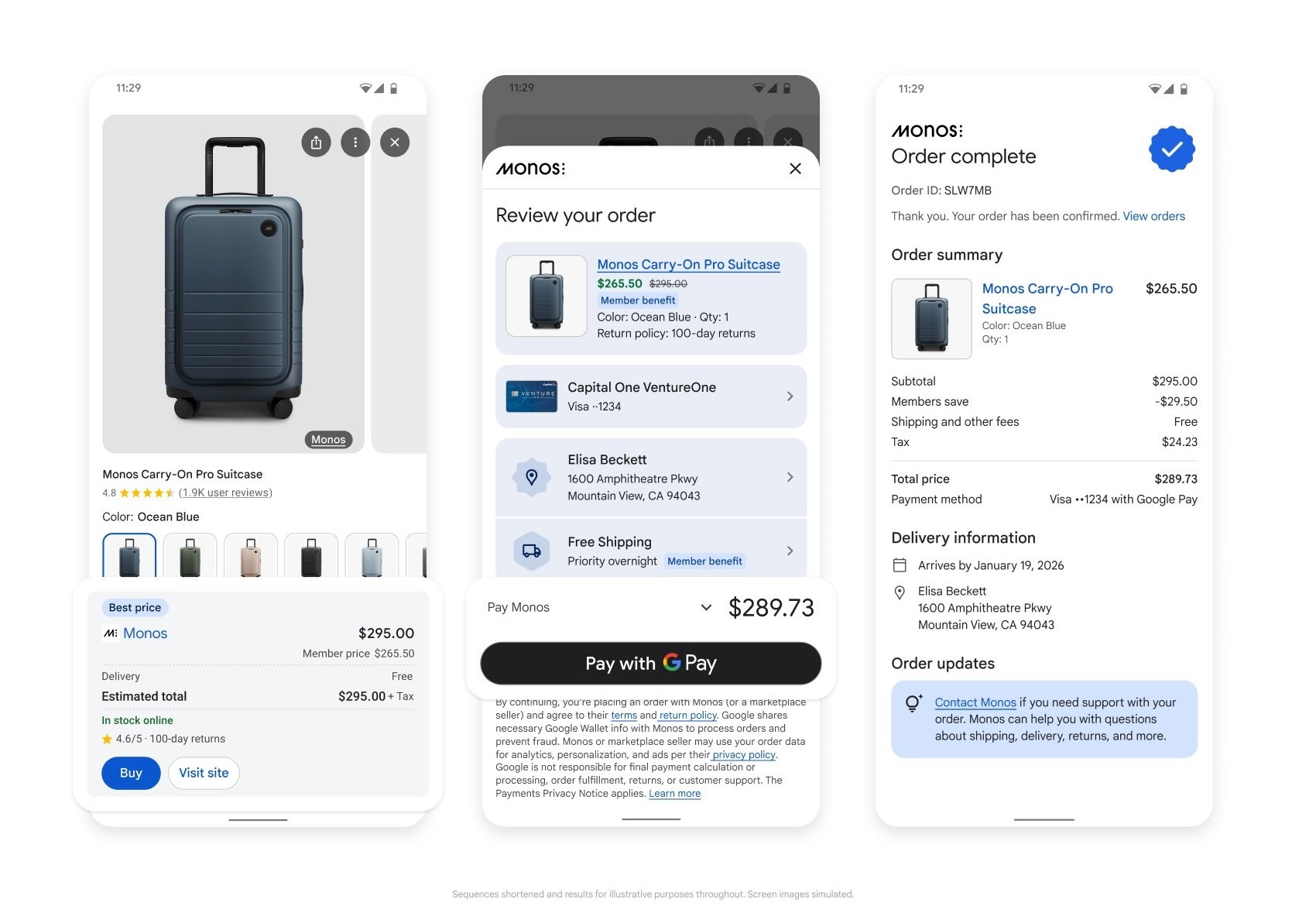
Related: Under the Hood: Universal Commerce Protocol (UCP), Google
For developers: Getting started with UCP, Google UCP guide
How does it matter for SEO?
The big picture here is agentic commerce. The idea that AI assistants (like Google’s Gemini or AI Mode in Search) will increasingly do your shopping for you, not just help you search. UCP is the infrastructure that makes that possible across many retailers at once.
Google is also making it easier for retailers of all sizes to plug into this system via Google Merchant Center, and big commerce platforms like Salesforce, Stripe, and Commerce Inc are signing on.
The question then becomes: Can the AI even see your products clearly enough to recommend or buy them?
What e-commerce brands and website owners can do
1. Clean up your product data now
This is the clearest thing we can do. AI agents will surface products based on the quality of your data feeds: pricing, inventory levels, product variants, and descriptions. If your data is messy, outdated, or incomplete, AI agents will skip you. Think of it like SEO, but for robots that buy things.
Audit your Google Merchant Center feed
- Make sure pricing and inventory are accurate and updated in real time
- Ensure variants (sizes, colors, etc.) are clearly structured
2. Get into Google Merchant Center if you’re not already
Google is rolling out a simplified UCP onboarding process through Merchant Center in the coming months. This is your on-ramp. Getting set up early puts you ahead of competitors who wait.
3. If you use Salesforce or Stripe, watch for UCP integration
Both platforms are actively implementing UCP. This means you may be able to opt into agentic commerce capabilities directly through tools you already use.
4. Think about your loyalty/membership perks
The identity linking feature means customers can carry their member benefits (free shipping, member pricing) into AI-agent shopping sessions. If you have a loyalty program, make sure it’s properly configured; this could be a meaningful competitive differentiator when AI agents are comparing your offer vs. a competitor’s.
5. Start small
You don’t have to implement everything at once. The protocol is designed so you can adopt individual features (like just the catalog, or just cart functionality) as you’re ready.
5. New Google patent hints that it could replace traditional search results with AI-generated landing pages
This is only a patent, not something implemented in Google Search. A newly surfaced Google patent reveals plans to replace traditional search results with AI-generated landing pages — pages that automatically summarize and answer a user’s query.
This does fit with Google’s broader trajectory towards AI-driven synthesis, such as AI Overviews (AIOs) and AI Mode.
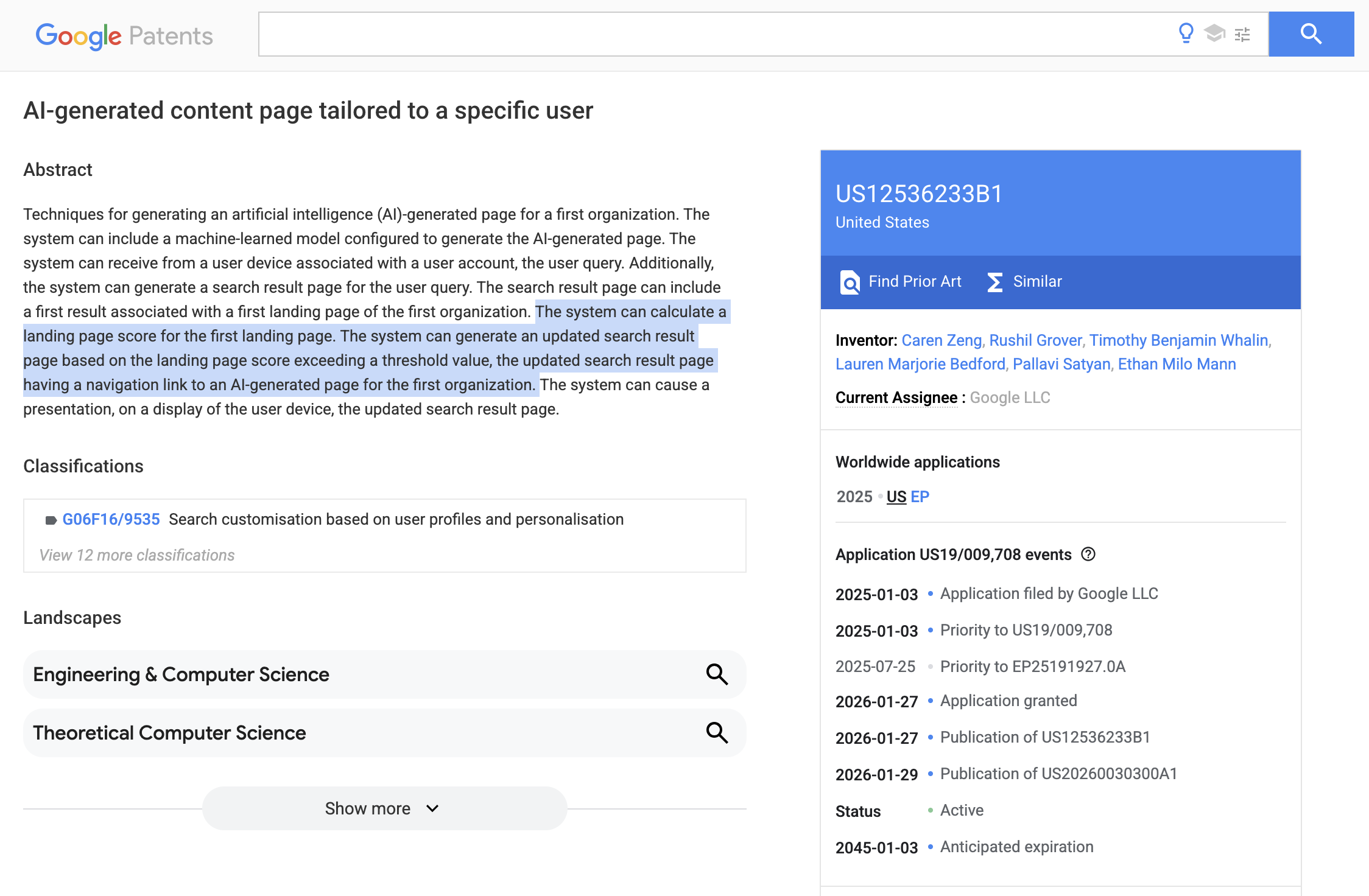
This means Google search may take you from the results page to a super-personalized AI-generated page that answers your query instead of sending you to a website.
Here’s a fictitious example:
You search for “small dining table for a narrow apartment kitchen” on a furniture retailer like IKEA or Wayfair. Normally, clicking on a SERP result takes you to a Dining Tables page, and you’ll spend time on the site filtering products by size, shape, and style yourself.
Instead, Google could generate a page that already shows you compact, space-saving tables — pre-filtered for small footprints, with options sorted by room size suitability. It might even surface a round table recommendation because the AI understood that round tables work better in tight spaces than rectangular ones.
You didn’t have to know the right search terms or filters. Google would just understand what you actually needed from your search query, and create new landing pages from the SERPs if your website pages aren’t good enough (based on this patent).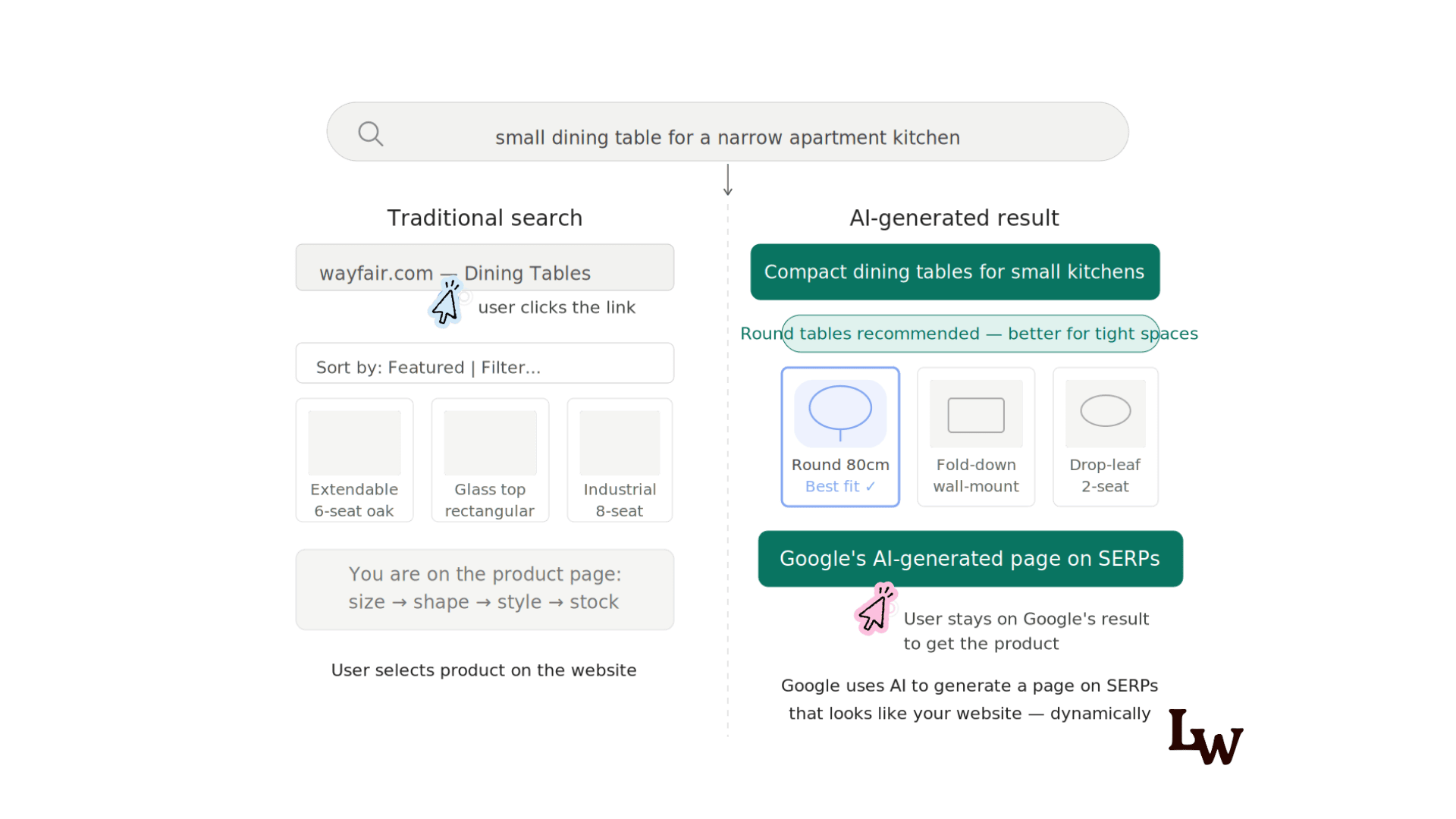
How this matters for SEO:
Again, this is only a patent, not something Google has implemented now or in the future. But the patent does suggest this system can replace website pages in both organic and paid (sponsored) results. If this comes to pass, it would mean authority will become less about ranking first and more about being a trusted source that Google’s AI can use to populate these new pages.
We can expect traffic to websites to reduce again, but instead of worrying about that, you should make sure your website’s structure and content are SEO-optimized, and can support this new AI search capability for Google to extract and display to users.
6. Golden nuggets in Google’s Liz Reid’s interview about the future relationship between Google Search and Gemini
On March 6th, 2026, Liz Reid talks candidly about the future of Google Search and AI in this interview with Access Podcast.
The core message is that nobody, not even Google, knows exactly how AI search and AI assistants will shake out. Liz Reid is being unusually candid about this. She’s saying Google Search and Gemini currently have different purposes (Search = finding information on the web; Gemini = productivity and creation), but whether they’ll merge, stay separate, or be replaced by something entirely new is genuinely unknown.
AI agents
The part about agents is significant. Liz is suggesting the future internet may mostly be AI agents talking to other AI agents, not humans browsing directly. That would fundamentally change what “search” even means. If your AI assistant is fetching information on your behalf, do you ever “search” at all?
Google vs ChatGPT
Liz pushes back on the popular narrative that this is Google vs. ChatGPT, winner takes all. Her view is that multiple tools can coexist, and the overall pie is growing because AI is enabling people to ask far more questions than before.
Preferred sources and spotlighting subscriptions
Liz also hints that Google wants to personalize results around sources you already trust or pay for. Essentially, Google is trying to make search results more useful by factoring in what you actually have access to.
In December 2025, Google had already announced rolling out Preferred Sources globally and is Spotlighting subscriptions.
- Preferred Sources is going global. English users worldwide can now pick their favorite outlets to see more of in Top Stories. Nearly 90,000 unique sources have been selected so far, and users who pick a preferred source click through to it twice as often.
- Subscription-aware search is a new feature that detects which news outlets you pay for and surfaces their content more prominently. Including a dedicated carousel. It’s launching in the Gemini app first, with Search to follow.
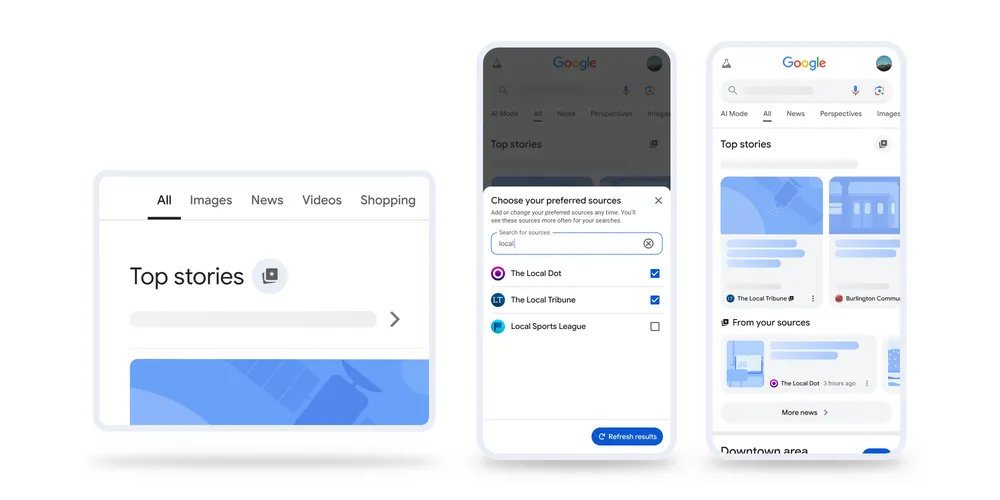 Source: The Keyword, Google
For example, right now, Google shows you the “best” results for a query, but many of those results are paywalled — you click, hit a wall, and bounce back. Reid is saying Google wants to fix that by learning which outlets you subscribe to and prioritizing those results for you specifically.
Related: Google rolls out Preferred sources for Top Stories in Search, SEJ
Related: New ways to connect with your favorite sources and explore the web, Google
7. WordPress.org now serves markdown output for AI agents and developers
Another major topic was markdown output. More platforms are starting to offer content in markdown because AI agents can process it more efficiently than full HTML pages.
WordPress.org now provides markdown versions of pages, and similar work is spreading across the WordPress ecosystem.
The implementation leans on an existing plugin, html-to-md by Automattic engineer Dennis Snell, which handles the HTML-to-Markdown conversion on the fly.
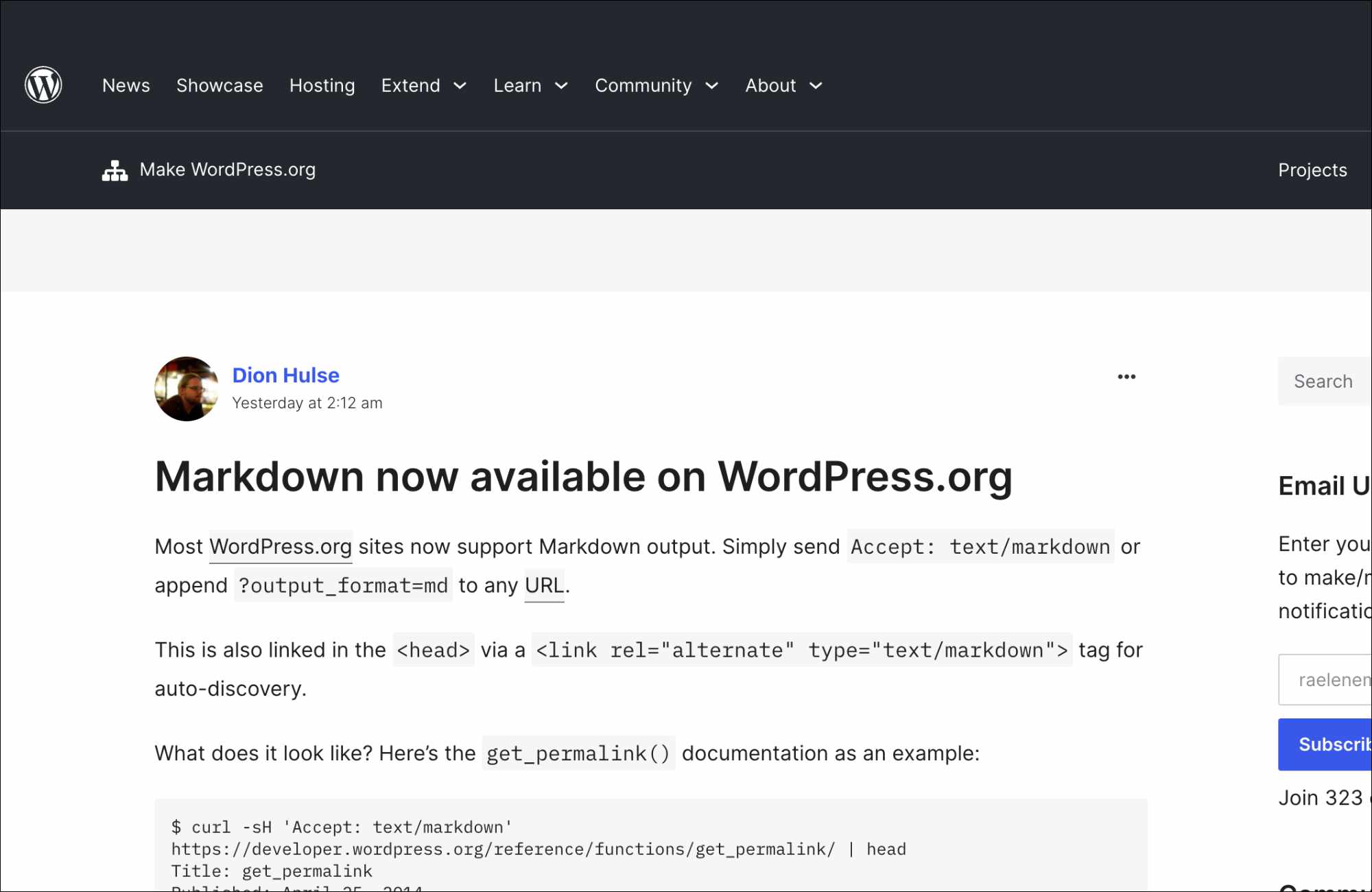
Here’s what Dion Hulse, Software Developer, WordPress, said about this:
These systems learn from documentation across the web. By offering WordPress.org content in clean, structured Markdown, we make it easier for them to understand WordPress in their native format, and we establish WordPress.org as a canonical knowledge source. This helps ensure that when AI tools learn about WordPress, they’re learning from accurate, up-to-date, official content — not outdated or third-party interpretations.
In February 2026, Cloudflare introduced its new Markdown for AI agents feature — an endpoint that can return an entire site in markdown through a single API call.
Why this matters for SEO
I think the big picture here is that machine-readable simplicity is getting more valuable. Many AI systems strip down pages to text. Since AI systems don’t behave like a fully visual browser experience, they are closer to an old text-based browser that cares about readable content far more than styling.
- Text is still the most reliable content format
- AI machines will take the easier path and work from text
- Images are less reliable as a primary communication layer
- Heavy JavaScript can slow down or complicate access
- Clear structure beats visual flair for machine interpretation
In other words, a website overloaded with decorative output may look polished to people but still make life harder for bots.
A few more SEO and AI Search items that came up:
- Shopify sites can sell to ChatGPT users via Agentic Storefronts. Agentic Storefronts give merchants out-of-the-box access to major AI channels—ChatGPT, Microsoft Copilot, AI Mode in Google Search, and the Gemini app—managed centrally from the Shopify Admin.
- Google expands Ads in AI Mode, Sponsored Stores spotted.
- ChatGPT Location sharing update. Users can now share their location for more tailored results for local queries in an update. Spotted by Glenn Gabe
- More reports of Google hitting self-promotional listicles hard again
- Loading Content With JavaScript Does Not Make It Harder For Google Search, Search Engine Roundtable. Google has removed a whole section from its JavaScript SEO documentation because it was outdated and Google says loading content with JavaScript does not make it hard for Google Search.
- Nvidia Is Planning to Launch an Open-Source AI Agent Platform
- Amazon Blocks Perplexity’s Automated Shopping Bot
- New AI-powered computing tools and desktop